Microfiber children's products must be soft, clean, colorfast, and strong enough for daily use. Buyers also need proof that the product meets children's product safety requirements in the target market. The key control areas are microfiber fabric composition, chemical safety testing, and choking hazard prevention. This guide explains the material, design, testing, and factory inspection steps that overseas buyers and distributors should check before placing a bulk order.
For most products, a safe purchasing decision depends on four questions: What is the fiber made from? Which chemicals may be present? Can any small part become loose? Can the product stay safe after repeated washing? A documented answer to each question helps reduce product recalls, customer complaints, and customs delays.
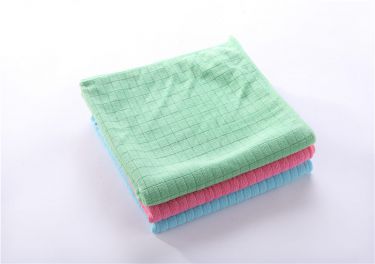
1. Quick answer: What makes a microfiber children's product safe?
A safe microfiber children's product uses verified fibers, approved dyes, secure construction, and packaging that matches the child's age. It should pass relevant chemical, physical, flammability, and labeling checks before shipment. The exact test list depends on the product type, age group, country, and intended use.
| Safety area | What buyers should confirm | Useful evidence |
|---|---|---|
| Material identity | Fiber type, fabric weight, color, and finish are clearly defined. | Material specification and supplier declaration |
| Chemical safety | Dyes, finishes, and coatings do not exceed market limits. | Recent laboratory test report |
| Physical safety | Seams, labels, loops, snaps, and decorations remain secure. | Inspection record and product sample |
| Use safety | The product is suitable for its stated age and use environment. | Risk assessment and user instructions |
| Traceability | Each production batch can be connected to materials and records. | Batch code, packing list, and quality file |
2. Understand microfiber material requirements
Polyester and polyamide must be clearly identified
Microfiber is not one single chemical material. It usually refers to very fine synthetic fibers, commonly polyester, polyamide, or a blend of both. The fiber ratio affects softness, absorbency, drying speed, color performance, and care instructions. The product specification should state the fiber content instead of using only the word microfiber.
Buyers should compare the approved sample with the production fabric. Check fabric weight, thickness, surface feel, edge finishing, and color. A change from a polyester-polyamide blend to low-cost polyester can change product performance and may require a new safety review.
Finishes and coatings need separate control
Some children's products use printing, water-repellent finishes, antibacterial treatments, silicone softeners, foam layers, or plastic parts. Each added material can create a new chemical or physical risk. The factory should list every component that touches the child or may enter the child's mouth.
Do not approve a finished product based only on a fabric certificate. A finished product test is more useful because it checks the real color, print, thread, label, coating, and accessory combination.
3. Control chemical safety before mass production
Dyes, heavy metals, and restricted substances
Children's products may be exposed to saliva, sweat, skin contact, and frequent washing. The main chemical review may include azo dyes, extractable heavy metals, formaldehyde, phthalates, organotin compounds, alkylphenols, and other restricted substances. The required list depends on the destination market and product category.
For the European market, buyers commonly review REACH restrictions and relevant textile requirements. For the United States, children's products may need to follow Consumer Product Safety Improvement Act requirements and applicable Consumer Product Safety Commission rules. These are not identical systems. A report for one market should not automatically be treated as approval for another market.
Colorfastness is a safety and quality issue
Color transfer can stain skin, clothing, or bedding. It can also become a concern when a child chews or sucks the fabric. Ask the factory to review colorfastness to washing, rubbing, water, and perspiration. A practical internal target is to maintain a high colorfastness grade under the selected test method, while the final acceptance level should follow the buyer's market and product standard.
Odor and surface residue
A strong chemical odor can indicate poor storage, excess finishing agent, printing residue, or packaging problems. Odor alone does not prove a legal violation, but it is a useful warning sign. Inspectors should open cartons, check the product after 24 hours, and compare the smell with the approved sample.
4. Prevent choking and physical hazards
Secure every small part
Children's microfiber products may include eyes, noses, buttons, snaps, zippers, ribbons, cords, labels, hanging loops, and decorative patches. A part that becomes loose can create a choking hazard. Pull tests, tension checks, seam inspections, and age-related small parts evaluation should be considered for every detachable component.
Soft products are not automatically safe. A plush microfiber towel with a loose button can present a greater hazard than a plain towel. Product safety depends on the complete construction, not just the softness of the fabric.
Review cords, loops, and long straps
Long cords and loops can create entanglement or strangulation risks. Avoid unnecessary cords on products intended for infants and young children. If a loop is needed for hanging, make it short, secure, and suitable for the intended use. Keep adult-use accessories separate from products marketed for children.
Check edges and seams
Rough edges, exposed needles, broken threads, and sharp zipper parts can scratch skin. Inspect the binding, overlock stitch, hem, and corner areas. A production sample should be washed and dried before inspection because laundering can reveal seam opening, fabric distortion, loose threads, and peeling prints.
5. Match requirements to the product category
| Product type | Main safety concerns | Key checks |
|---|---|---|
| Baby washcloth | Color transfer, loose loops, lint, and skin contact | Colorfastness, fiber content, wash durability, chemical screening |
| Children's bath towel | Absorbency, edge strength, hanging loop, and shrinkage | Absorbency test, seam strength, wash test, care label review |
| Baby bib | Neck fastening, coating contact, and choking hazards | Fastener pull test, chemical test, sharp edge check, age review |
| Microfiber toy or comfort item | Filling leakage, small parts, seams, and flammability | Seam test, stuffing inspection, flammability review, small parts test |
| Children's cleaning cloth | Misuse, dye transfer, lint, and chemical finish | Material declaration, residue review, wash performance, labeling |
A towel used by a child is not assessed in exactly the same way as a toy. The intended use, contact area, age statement, and added components change the risk profile. Buyers should create a product-specific checklist instead of using one general certificate for every item.
6. Follow a step-by-step safety process
The following process gives buyers and manufacturers a clear path from product idea to shipment:
- Define the product, intended age, use environment, fiber content, dimensions, and added components.
- Identify the destination market and list the applicable children's product safety requirements.
- Complete a design risk review for small parts, cords, seams, labels, coatings, and packaging.
- Approve the raw materials, dyes, thread, trims, prints, and packaging before production.
- Make a development sample and test the finished sample, not only the base fabric.
- Review laboratory results against the buyer's specification and destination-market limits.
- Run a pilot production and check whether mass production matches the approved sample.
- Perform an in-line inspection during cutting, sewing, printing, and packing.
- Complete a final inspection using an agreed sampling plan and defect limits.
- Release the goods only after the test reports, inspection records, labels, and batch documents are complete.
In simple flow-chart form:
Product definition - Risk review - Material approval - Sample testing - Pilot production - In-line inspection - Final inspection - Document release - Shipment
If a material, color, print, trim, supplier, or production location changes, repeat the risk review. A certificate issued for an old sample may not represent the new product.
7. Use testing that reflects real child use
Wash and durability testing
Microfiber children's products may be washed dozens of times. Test the approved sample after repeated washing according to the care label. Record shrinkage, color change, absorbency, lint, seam opening, print cracking, and shape change. A product that looks safe before washing may fail after repeated use.
Absorbency and drying performance
For towels, washcloths, and bath accessories, absorbency is a major performance requirement. Record the time needed to absorb a measured amount of water and compare results between development and production samples. Fast drying also helps reduce damp storage and unpleasant odor.
Lint and fiber shedding
Loose fibers can become a quality complaint and may be unsuitable for products used near the mouth or nose. Examine the surface after washing, rubbing, and drying. Pay special attention to cut edges, printed areas, and brushed surfaces. Use clean processing areas and remove loose lint before packing.
Flammability review
Some children's products may be subject to flammability rules, especially products with a toy function, filling, pile, or sleep-related use. The requirement varies by country and product category. Confirm the correct standard before testing. Never assume that a thin microfiber fabric has the same flammability performance as a towel or plush fabric.
8. Treat labels and packaging as safety controls
Labels should provide accurate fiber content, care instructions, country-of-origin information where required, manufacturer or importer details where required, and age or use warnings. The text must match the product. Incorrect care information can cause shrinkage, color bleeding, or damage that creates a safety problem.
Plastic bags and packaging films may create a suffocation risk for young children. Use the packaging format required by the destination market. Check warning statements, ventilation holes, bag thickness, carton marks, and barcode information before shipment.
Do not place a toy warning on a product that is not a toy unless the wording is legally appropriate. Do not market an ordinary towel as a baby product without reviewing the extra claims and requirements created by that marketing language.
9. Compare common buyer approaches
| Approach | Short-term result | Long-term risk | Better practice |
|---|---|---|---|
| Test only the base fabric | Lower initial cost | Finished trims, prints, or coatings may fail | Test the finished product and all high-risk components |
| Use one report for every country | Simple document control | Different legal limits or test methods may apply | Map reports to each destination market |
| Inspect only before shipment | Fewer factory visits | Defects are found too late to repair | Use in-line and final inspections |
| Choose the lowest fabric price | Lower purchase cost | More lint, poor absorbency, and unstable color | Compare total quality cost over the product life |
| Rely on a supplier promise | Fast approval | Weak traceability and uncertain material changes | Require specifications, test evidence, and batch records |
10. Build a supplier quality file with Kaiyuan
A reliable supplier should help the buyer keep a complete product file. Kaiyuan can organize the material specification, approved artwork, sample photos, test reports, inspection records, packing details, and batch information for each microfiber children's product.
The file should identify the fabric composition, fabric weight, color code, thread type, trim supplier, print method, packaging material, production date, and inspection result. This information makes it easier to investigate a complaint and repeat a successful order.
Questions to ask a microfiber children's product manufacturer
- What is the exact fiber composition and fabric weight?
- Which dyes, coatings, prints, and softeners are used?
- Can the finished product be tested for the destination market?
- How are small parts, loops, seams, and labels checked?
- What happens if the raw material or production location changes?
- Can the factory provide batch traceability and final inspection records?
- How does the product perform after repeated washing?
Final checklist for overseas buyers
Before approving a shipment, confirm these points:
- The product age and intended use are clearly defined.
- The fiber composition matches the purchase specification.
- All dyes, prints, coatings, threads, and trims have been reviewed.
- The finished product has passed the required chemical safety tests.
- Small parts, loops, cords, seams, and edges have been inspected.
- Colorfastness, absorbency, shrinkage, lint, and wash durability meet the agreed targets.
- Packaging and warnings meet the destination-market requirements.
- The production sample matches the tested and approved sample.
- Inspection records and batch documents are complete.
- Any design or material change has received written approval.
Microfiber children's product safety is not based on softness alone. It comes from controlled materials, secure construction, suitable testing, accurate labeling, and traceable production. When overseas buyers review these 10 areas before mass production, they can reduce avoidable risk and build more reliable children's product lines with Kaiyuan.