Microfiber Towels for Bathroom Cleaning are designed to solve common cleaning problems such as slow drying, water streaks, lint, unpleasant odors, and repeated rewiping. This guide explains how microfiber technology works, how purchasing teams should evaluate towel specifications, and how to use and maintain the towels for better absorption and faster drying.
For professional cleaners, hotels, janitorial distributors, facility managers, and household buyers, the main goal is not simply to purchase a soft towel. The goal is to select a towel that absorbs water quickly, releases dirt effectively, dries between uses, remains durable after washing, and reduces labor costs. Kaiyuan provides microfiber cleaning solutions for users who need consistent performance across bathrooms, kitchens, glass surfaces, floors, and other high-use areas.
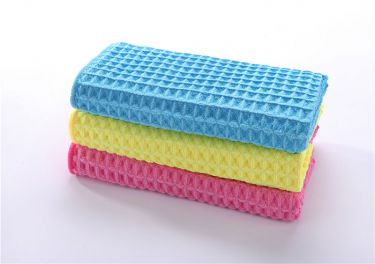
Microfiber technology captures more water and dirt in less time
Split fibers create more contact points
Microfiber is made from extremely fine synthetic fibers, commonly polyester, polyamide, or a blend of both. During manufacturing, many fibers are split into smaller sections. These fine sections create more contact points than ordinary cotton or standard woven fabric.
When the towel touches a wet surface, the small fiber structure helps spread water across the towel instead of allowing water to remain in a single heavy spot. This produces several practical benefits:
- Water is collected quickly from sinks, showers, mirrors, counters, and fixtures.
- Fine fibers reach into small surface irregularities where ordinary cloth may leave moisture behind.
- Dirt, soap residue, dust, and skin oils can be held inside the towel structure.
- The towel can clean with less liquid detergent or chemical solution.
- The surface dries more evenly after wiping.
Capillary action moves moisture through the towel
Microfiber towels use the small spaces between fine fibers to move water through the fabric. This capillary action helps draw moisture away from the surface and distribute it throughout the towel. A towel with a suitable fiber blend and open construction can therefore absorb water rapidly without feeling immediately saturated.
Absorption performance depends on more than fiber fineness. Buyers should also check the following factors:
- Fiber blend: Polyamide generally improves softness and water absorption, while polyester supports durability and cleaning strength.
- Fabric weight: Higher GSM can provide more liquid capacity, but excessive weight may increase drying time.
- Weave or knit structure: A suitable structure helps balance absorption, wiping control, and release of dirt during washing.
- Surface finish: A clean, low-lint finish is important for mirrors, glass, and polished fixtures.
- Edge construction: Strong edges help prevent fraying during repeated laundering.
Choose the right microfiber specifications for bathroom work
Compare the fiber blend before comparing the price
The fiber ratio affects both cleaning feel and service life. A higher polyester content can provide strength and effective scrubbing, while added polyamide can improve softness and liquid uptake. The best ratio depends on the application rather than on a single universal formula.
- For glass and mirrors, choose a smooth, low-lint towel that leaves minimal residue.
- For sinks and counters, choose a balanced towel that absorbs water and removes light soil.
- For shower walls and wet floors, choose a heavier towel with greater liquid capacity.
- For fixtures and polished surfaces, choose a soft towel that reduces the risk of fine scratches.
- For industrial or commercial use, prioritize edge strength, colorfastness, and wash durability.
Use GSM as a practical capacity indicator
GSM means grams per square meter. It indicates fabric weight and helps buyers compare products with different sizes. GSM is not a complete measure of quality, but it is useful when combined with fiber blend, construction, and test results.
When reviewing product specifications, consider these general categories:
- Lightweight towels: Easy to handle, quick to dry, and useful for routine polishing or light wiping.
- Medium-weight towels: A practical choice for bathroom counters, sinks, mirrors, and general cleaning.
- Heavyweight towels: Suitable for high water absorption, floor wiping, shower areas, and demanding commercial work.
A very heavy towel is not always the best choice. If it holds too much water after use, it may take longer to dry and may develop odor when stored without adequate ventilation. Buyers should balance absorption capacity with drying speed and handling comfort.
Match the size and color to the cleaning system
Size affects productivity. Small towels are easier to fold and use around taps, handles, and narrow fixtures. Larger towels cover more surface area and can reduce the number of passes on counters, doors, and shower panels.
- Small sizes are suitable for faucets, handles, mirrors, and detail work.
- Medium sizes are suitable for sinks, counters, appliances, and general bathroom cleaning.
- Large sizes are suitable for shower panels, floors, walls, and high-volume wiping.
Color coding can help prevent cross-contamination. For example, a facility may assign separate colors to toilets, sinks, glass, kitchens, and general surfaces. The color system should be documented and used consistently by every worker.
Follow a step-by-step process for maximum absorption
Step 1: Select the correct towel for the surface
Start by identifying the surface, soil level, and amount of water that must be removed. Do not use one towel specification for every task without testing it.
- Use a low-lint towel for mirrors and glass.
- Use a medium or heavy towel for sinks and wet counters.
- Use a more durable towel for soap residue, grout, and textured surfaces.
- Use separate towels for toilets and high-touch areas.
- Remove damaged, oily, or heavily contaminated towels from the clean towel supply.
Step 2: Prepare the towel before cleaning
A clean towel performs more consistently than a towel containing old detergent, fabric softener, or oil. Before use, inspect the towel and prepare it according to the cleaning task.
- Confirm that the towel is clean and free from strong odor.
- Shake it gently to open the fabric surface.
- Fold it into quarters to create multiple clean working faces.
- For dry dusting, use the towel dry.
- For damp cleaning, wet the towel with clean water or the approved cleaning solution.
- Wring out excess liquid so the towel is damp rather than dripping.
Step 3: Remove loose soil before adding moisture
Loose dust, hair, and grit can reduce cleaning performance and may cause scratching when dragged across a polished surface. Remove loose particles before wet wiping whenever possible.
- Dust or vacuum the area first.
- Pick up hair and large particles by hand or with a suitable tool.
- Use a separate towel for visibly dirty areas.
- Do not use a wet towel to push dry grit across glass, stone, or polished metal.
Step 4: Wipe in a controlled pattern
Use overlapping strokes instead of random circular movements. A controlled pattern distributes moisture evenly and makes missed areas easier to identify.
- Start with the cleanest area and move toward the dirtiest area.
- Wipe from top to bottom where possible.
- Use straight overlapping strokes on mirrors and large panels.
- Apply moderate pressure instead of pressing the towel flat with excessive force.
- Refold the towel when the working face becomes wet or dirty.
- Change the towel when all usable faces are contaminated.
Step 5: Dry and polish the surface
After removing the main moisture, use a clean, dry microfiber towel for the final pass. This step reduces water marks and improves the appearance of glass, chrome, stainless steel, and polished fixtures.
- Use a dry, low-lint towel for the final pass.
- Inspect the surface under normal lighting.
- Rewipe visible streaks with a clean section of the towel.
- Do not continue polishing with a towel that is saturated or contaminated.
- Place the used towel in the correct collection container immediately after use.
Use a simple tool list to improve cleaning consistency
Required tools for basic bathroom cleaning
A reliable process does not require a complicated equipment list. The following tools are usually sufficient for routine bathroom work:
- Microfiber towels in multiple colors.
- A clean water bucket or supply container.
- Approved bathroom cleaning solution.
- Spray bottle with a clear product label.
- Gloves suitable for the cleaning chemicals in use.
- Protective eyewear when splashing is possible.
- Vacuum, dustpan, or soft brush for loose debris.
- Squeegee for large glass or shower panels.
- Separate laundry bags or containers for used towels.
- Drying rack or ventilated drying area.
- Product checklist for towel inspection and replacement.
Optional tools for commercial and high-volume facilities
Large facilities may add systems that improve control and reduce cross-contamination:
- Color-coded storage bins.
- Pre-measured chemical dilution bottles.
- Commercial washing machine with programmable cycles.
- Drying shelves with airflow around each towel.
- Barcode or inventory labels for towel distribution.
- Cleaning logs that record room, worker, date, and towel quantity.
Improve drying performance through correct washing and storage
Wash microfiber separately from lint-producing fabrics
Microfiber can collect lint from cotton towels, fleece, paper products, and other fabrics. Washing microfiber separately helps preserve its cleaning surface and reduces lint transfer.
- Shake out loose dirt before placing towels in the washing machine.
- Separate towels by color and contamination level.
- Wash microfiber separately from cotton and heavily linting fabrics.
- Use the detergent quantity recommended for the load and soil level.
- Use clean water and an appropriate wash temperature for the towel specification.
- Run an additional rinse if detergent residue is visible or the towels feel coated.
Avoid fabric softener and excessive detergent
Fabric softener can coat microfiber fibers and reduce their ability to absorb water. Excessive detergent can also remain inside the fabric and make the towel feel greasy or less responsive.
- Do not use fabric softener unless the manufacturer specifically approves it.
- Do not use bleach unless the product specification confirms compatibility.
- Use the minimum effective detergent dose.
- Do not overload the washing machine.
- Do not mix towels contaminated with oil or strong chemicals with normal bathroom towels.
Dry towels completely before storage
Complete drying is essential for odor control and service life. A damp towel folded into a closed bin may develop an unpleasant smell even when it was washed correctly.
- Remove towels from the washer promptly after the cycle ends.
- Shake each towel to separate folded sections.
- Dry using the approved dryer setting or a clean ventilated drying rack.
- Confirm that the center and edges are fully dry.
- Fold only after the towel has cooled and dried completely.
- Store clean towels in a dry, clean cabinet away from used towels and chemicals.
Measure absorption and drying performance before purchasing in volume
Use a practical comparison test
Purchasing teams should test samples under the same conditions rather than relying only on marketing descriptions. A simple comparison can reveal which towel offers the best balance of absorption, drying speed, surface finish, and durability.
- Prepare two or more towel samples with the same or clearly recorded size.
- Weigh each dry towel and record the result.
- Apply the same measured amount of water to a clean test surface.
- Wipe the surface using the same number of strokes and similar pressure.
- Weigh the towel again to estimate the amount of water collected.
- Record the time needed for the surface to appear dry.
- Hang or machine-dry the towels under the same conditions.
- Record the time required for each towel to become fully dry.
- Inspect the surface for streaks, lint, residue, and remaining water.
- Repeat the test after several wash cycles to evaluate durability.
Review the results using purchasing criteria
The best towel is the one that performs consistently in the real cleaning environment. Review each sample using measurable and operational criteria:
- Initial water pickup speed.
- Total liquid capacity.
- Surface drying result.
- Drying time after washing.
- Lint release.
- Streaking on glass and polished surfaces.
- Ease of wringing and handling.
- Colorfastness after repeated washing.
- Edge strength and resistance to fraying.
- Cost per use rather than purchase price alone.
Calculate cost per use instead of unit cost
A cheaper towel may create higher costs if it absorbs less water, leaves streaks, requires extra passes, or wears out quickly. To estimate cost per use, compare the purchase cost with expected wash cycles and labor savings.
Consider the following factors:
- Purchase price per towel.
- Expected number of washing cycles.
- Labor time required per cleaning task.
- Water and chemical consumption.
- Drying energy or drying space requirements.
- Replacement rate caused by fraying, odor, or loss of absorbency.
- Inventory required to support the cleaning schedule.
Avoid common mistakes that reduce microfiber performance
Mistake 1: Using one towel for every surface
Different areas produce different contamination risks. Using the same towel for a toilet, sink, mirror, and door handle can spread soil and bacteria. Use color coding, separate storage, and a documented replacement system.
Mistake 2: Applying too much cleaning solution
Excess chemical solution can leave residue and make glass or fixtures look dull. It can also reduce the towel's ability to absorb water. Apply the recommended dilution and use a damp towel rather than a soaking wet towel unless the task specifically requires more liquid.
Mistake 3: Scrubbing dry grit across delicate surfaces
Dust and grit may scratch polished surfaces when rubbed with force. Remove loose particles first and use a suitable soft towel for delicate finishes.
Mistake 4: Washing microfiber with cotton towels
Cotton lint can become trapped in the microfiber structure. This may cause visible lint on mirrors and glass and reduce the clean appearance of the towel. Wash microfiber separately whenever possible.
Mistake 5: Using fabric softener or excessive bleach
Fabric softener may block the spaces that support capillary action. Strong bleach may weaken fibers or damage color. Follow the product care instructions and confirm chemical compatibility before introducing a new laundry product.
Mistake 6: Storing towels while they are damp
Damp storage encourages odor and may create an environment where microorganisms multiply. Dry towels completely and store them with adequate airflow.
Mistake 7: Ignoring towel replacement signs
A towel should be removed from service when it shows persistent odor, heavy staining, frayed edges, hardened fibers, reduced absorption, or visible contamination that cannot be removed by normal laundering.
Select a microfiber program that supports long-term cleaning results
Create a standard operating procedure
A written procedure helps every worker use the towels in the same way. The procedure should define towel colors, surface assignments, preparation, cleaning strokes, laundry rules, drying requirements, and replacement criteria.
- Assign a color to each cleaning zone.
- Define the correct towel size and weight for each task.
- Specify whether the towel should be used dry, damp, or wet.
- Set a maximum number of rooms or surfaces per towel.
- Explain when a towel must be refolded or replaced.
- Record the approved washing and drying method.
- Train workers to separate clean and used towels.
Build an adequate towel inventory
Insufficient inventory often causes workers to reuse damp or contaminated towels. Calculate the number of towels required according to daily workload, laundry turnaround time, cleaning frequency, and emergency reserve needs.
- Estimate the number of rooms or work areas cleaned each day.
- Estimate the number of towels required for each area.
- Add towels needed for high-soil tasks and color separation.
- Include towels held in the laundry process.
- Add a reserve for unexpected spills, maintenance delays, and peak demand.
- Review inventory levels regularly and replace worn towels before performance declines.
Work with a supplier that can provide consistent specifications
Purchasing teams should request clear product information and consistent production standards. Useful supplier questions include:
- What is the fiber blend?
- What are the available sizes and GSM options?
- Is the towel low-lint and suitable for glass?
- How are the edges finished?
- What washing and drying instructions are recommended?
- How does the towel perform after repeated laundering?
- Can colors and sizes be supplied consistently?
- Are samples available for absorption and drying tests?
- Can the supplier support private labeling or customized packaging?
When absorption, drying speed, hygiene control, and service life are evaluated together, microfiber becomes more than a basic wiping material. The correct towel specification and cleaning process can reduce rewiping, improve surface appearance, shorten drying time, and control operating costs.
For dependable Microfiber Towels for Bathroom Cleaning, evaluate the fiber structure, select the correct weight and size, follow the step-by-step workflow, wash and dry the towels correctly, and test samples before placing a large order. Kaiyuan can support purchasing teams that need practical microfiber performance for daily bathroom cleaning and other professional applications.