Customizing Microfiber Towels for Bath is not simply a matter of adding a logo. Buyers must choose the right custom microfiber towels with logo, define a repeatable color standard, select a decoration method that survives washing, and protect each towel with suitable packaging. This guide also covers personalized bath towels, cleaning performance, polyester-polyamide blends, absorbency, GSM, sublimation printing, colorfastness, and practical quality checks so a hotel, gym, spa, retailer, or promotional-products buyer can move from sample to production with fewer costly errors.
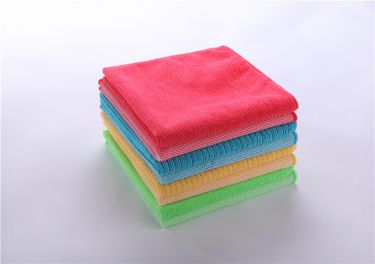
Different buyers usually have different problems. A hotel may need a consistent towel appearance across hundreds of rooms. A fitness studio may want a compact sweat towel that reinforces its brand at every class. An auto-detailing company may require several colors to separate glass, paint, wheels, and interior work. A retailer may need packaging that looks ready for shelf display rather than bulk shipment.
The underlying product decision is a balance among fiber composition, towel construction, weight, drying behavior, logo durability, color reproduction, and total landed cost. Microfiber is generally made from very fine synthetic fibers, most commonly polyester and polyamide. The exact fiber ratio, knitting or weaving method, pile height, edge construction, and finishing process affect the hand feel and cleaning behavior; therefore, a supplier’s sample should be evaluated rather than judged from a product photograph.
Why Businesses Customize Microfiber Towels for Bath
- Brand visibility: A logo, woven label, printed mark, or branded sleeve can make an otherwise generic towel recognizable.
- Operational control: Different colors can identify towel functions and reduce cross-use between cleaning areas.
- Retail presentation: A belly band, paper card, reusable pouch, or printed carton can communicate size, care instructions, and brand identity.
- Consistent procurement: A written specification prevents later batches from changing in color, weight, dimensions, or logo placement.
Important evidence note: No named customer testimonial or independently verifiable personal case was provided for this brief, so this article does not invent a personal success story or claim an unverified result. Instead, it uses recognized textile-testing concepts and a practical buyer workflow. For a real order, request production records, test reports, and an approved sample from the manufacturer, such as Kaiyuan, before making performance claims.
Microfiber Bath Towel Customization Goals
How to Prepare Custom Microfiber Towels with Logo, Color and Packaging
Tools: Product brief, measuring tape, digital scale, room-use chart, and a list of washing conditions.
Action: Record whether the towel is intended for bathing, hair drying, facial cleansing, gym use, spa service, hotel housekeeping, automotive detailing, or retail sale. Note the expected contact surface, moisture level, detergent type, washing temperature, dryer use, and approximate number of wash cycles.
Parameters to record: Finished length and width, target GSM, fiber composition, edge style, logo area, color references, packaging dimensions, carton quantity, and delivery requirements. GSM means grams per square metre and should be measured from a representative sample, not inferred from thickness alone.
Check: Ask whether one towel will serve one purpose or several. If the answer is “several,” identify the most demanding use because it should guide testing.
Failure fix: If the intended use is unclear, do not approve artwork or packaging. A towel designed for light promotional use may not be suitable for repeated commercial laundering.
1. Define the End Use of Your Microfiber Towels for Bath
Tools: Supplier specification sheet, sample towels, digital scale, ruler, magnifier, and absorbency test worksheet.
Action: Compare the supplier’s stated polyester and polyamide ratio, yarn type, pile structure, edge treatment, and weight. A common commercial construction uses a polyester-polyamide blend, but the ratio must be confirmed for the exact product. Look for loose threads, uneven pile, hard edges, odor, lint release, and dimensional distortion.
Parameters: Use one approved sample as the physical reference for size, weight, texture, stitching, and logo position. If your procurement specification requires a particular GSM or fiber ratio, write an acceptable tolerance into the purchase agreement rather than relying on phrases such as “premium” or “heavyweight.”
Check: Weigh several samples individually and measure them after conditioning in the same environment. Record the variation. Test absorbency with the same volume of water, contact time, and drying method for every sample. This is an internal comparison, not a substitute for a certified laboratory test.
Failure fix: If samples differ noticeably, ask for a revised production specification and a pre-production sample. If the towel feels greasy or leaves excessive lint, request information about washing, finishing, and fabric stabilization.
2. Select the Fiber Blend and Construction for Personalized Bath Towels
Tools: Vector artwork, logo color references, fabric swatches, wash-test plan, and artwork approval form.
Action: Match the decoration method to the fabric and the logo design:
- Sublimation printing: Often considered for polyester-rich fabrics because the dye is transferred into the polyester fibers. It is useful for detailed, multicolor artwork, but the supplier must confirm suitability for the exact microfiber construction.
- Screen printing or transfer printing: May suit simple marks and selected fabric surfaces. Request a hand-feel sample because a thick print can reduce softness or flexibility.
- Embroidery: Can provide a raised mark, but dense stitching may create stiffness, puckering, or snagging on a fine microfiber surface. Use a test patch before approval.
- Woven or sewn label: Useful when the brand needs a separate identity mark, care information, or packaging-style presentation. The label should not create an uncomfortable hard edge for bath use.
- Jacquard or woven-in branding: Can be appropriate for designs built into the textile structure, although artwork, minimum quantities, and lead times differ from printing.
Parameters: Supply the logo in a vector format such as AI, EPS, or editable PDF where possible. Specify finished logo width and height, placement from the towel edge, maximum number of colors if relevant, and whether Pantone references are required. A screen preview cannot establish final color on a textured fabric.
Check: Approve a decorated physical sample. Inspect fine lettering, registration, edges, surface feel, color variation, and logo alignment. Then wash the sample using the planned care process and compare it with an unwashed control.
Failure fix: If small text fills in or becomes unreadable, enlarge the lettering, simplify thin strokes, or change the decoration method. If the mark cracks, peels, bleeds, or becomes stiff, pause bulk production and require a revised sample.
3. Choose the Logo Method for Microfiber Towels for Bath
4. Set the Color System for Custom Microfiber Towels with Logo
Tools: Pantone or other approved color references, daylight-balanced light source, color approval sheet, and physical fabric swatches.
Action: Choose the towel base color and the logo color separately. State whether the color requirement applies to the fabric, print, label, packaging, or all four. Where brand consistency is important, provide a physical reference or an agreed color standard rather than a screen image.
Parameters: Record the color code, material on which it applies, acceptable visual tolerance, and approval lighting. Textile color is influenced by fiber, dye, finishing, surface pile, and viewing conditions. A printed paper color reference is not automatically identical to a dyed textile.
Check: Compare the lab dip or color swatch with the approved standard under consistent lighting. Check dark colors for crocking, pale colors for staining, and contrasting logo areas for bleed risk.
Failure fix: If the color is outside the agreed tolerance, do not approve from a digital photograph alone. Request another lab dip or swatch and document the approved version with a sample code.
5. Design Packaging for Personalized Bath Towels
Tools: Packaging dieline, product dimensions, barcode data, care-label information, carton plan, and drop-test or transport-test requirements.
Action: Select a format that matches the sales channel:
- Polybag or recyclable film bag: Suitable for moisture and dust protection during shipment, subject to local packaging rules.
- Paper belly band: A lower-material option that displays the logo, size, composition, and care information.
- Drawstring pouch: Useful for gym, spa, travel, and gift applications where the pouch has a second use.
- Rigid box or folding carton: Appropriate for premium retail presentation, but it increases material use, shipping volume, and cost.
- Master carton: Needed for warehouse handling. Define inner quantity, carton dimensions, gross weight, shipping marks, and barcode location.
Parameters: Confirm the folded towel dimensions before finalizing the package. Include fiber content, care instructions, country-of-origin information, barcode requirements, and any legally required warnings for the destination market. Do not print a performance claim such as “antibacterial” unless the finished product has appropriate substantiation and the claim complies with the target market’s rules.
Check: Pack a production-like sample, seal it, stack it, and transport it through a representative handling route. Inspect crushed corners, opened seals, moisture exposure, ink rub, and barcode readability.
Failure fix: If the towel is compressed beyond its intended appearance, the package opens, or the barcode fails to scan, revise the folding method, package dimensions, seal, or print finish before ordering packaging in volume.
Step-by-Step Production Workflow for Microfiber Towels for Bath
Step 1: Issue a Complete Technical Specification
Tools: Specification template, approved sample, artwork file, color reference, packaging dieline, and purchase-order checklist.
Action: Combine all decisions into one controlled document: towel dimensions, GSM, composition, construction, edge, color, logo method, logo position, packaging, labeling, carton details, quantity, inspection standard, and delivery terms.
Check: Make sure the purchase order and artwork approval use the same revision number. Confirm that the supplier has acknowledged every requirement.
Failure fix: If a requirement can be interpreted in two ways, add a drawing, measurement, tolerance, or physical reference. Avoid specifications based only on adjectives such as “soft,” “luxury,” or “high quality.”
Step 2: Approve the Blank Towel Sample
Tools: Ruler, scale, fabric inspection lamp, absorbency worksheet, and sample approval form.
Action: Inspect the unbranded towel before decoration. Measure dimensions, weigh it, check stitching and edges, examine the pile, and evaluate lint and odor. Wash and dry it according to the intended care process.
Check: Compare the washed sample with the specification and the original reference. Record shrinkage or distortion rather than relying on memory.
Failure fix: If the blank towel fails, do not try to solve the problem through printing or packaging. Correct the fabric specification first.
Step 3: Approve the Branded Sample
Tools: Vector artwork, measuring tools, wash-test materials, camera, and approval form.
Action: Verify logo location, size, color, sharpness, surface feel, and interaction with the towel pile. Photograph the sample beside a measurement scale and the approved color reference.
Check: Wash the decorated sample using the planned detergent, water temperature, agitation, and drying method. Compare logo appearance, towel hand feel, color transfer, and edge condition.
Failure fix: If the sample is not acceptable after washing, change the ink, curing or fixation process, artwork size, placement, or decoration method. Obtain a new sample instead of approving a verbal promise.
Step 4: Confirm Color and Packaging Proofs
Tools: Printed proof, packaging mock-up, physical color swatch, barcode scanner, and label checklist.
Action: Review the packaging at actual size. Confirm logo proportions, legal text, care information, barcode, product name, quantity, and opening method.
Check: Compare the physical proof with the artwork file and scan every barcode. Verify that the folded towel fits without excessive compression or loose movement.
Failure fix: Correct the file and issue a new proof if any text, color, barcode, or dimension is wrong. Do not treat a digital mock-up as final packaging approval.
Step 5: Run Pre-Production and In-Process Checks
Tools: Approved sample, inspection checklist, scale, ruler, color reference, logo placement template, and sampling plan.
Action: Inspect the first production pieces before the full run. During production, check dimensions, weight, color, seams, loose threads, logo alignment, print quality, packaging, and carton marks.
Check: Use the same inspection method for each batch. Record defects with photographs and measurements. If the order is large or high risk, use an independent inspection company and a written acceptance standard.
Failure fix: Segregate nonconforming products. Do not mix approved and unapproved goods in the same carton without identification and written disposition.
Step 6: Inspect Finished Microfiber Towels with Logo Before Shipment
Tools: Final inspection report, approved sample, carton scale, barcode scanner, measuring tools, and shipment documents.
Action: Check quantity, assortment, towel dimensions, packaging, carton labels, logo appearance, and visible defects. Review the supplier’s packing list and compare carton counts with the order.
Check: Confirm that the shipment contains the approved color and logo revision. Retain control samples from the same production batch for future comparison.
Failure fix: If the inspection identifies a recurring defect, request sorting, rework, replacement, or a documented concession before shipment. Keep the decision in writing.
Professional Testing Terms for Custom Microfiber Towels
Testing terminology helps buyers communicate with factories and laboratories:
- GSM: Mass per unit area, expressed as grams per square metre. It helps compare fabric weight when measured consistently.
- Colorfastness to laundering: Resistance of the textile color to washing. Relevant methods include standardized textile test procedures such as AATCC or ISO methods, depending on the market and laboratory.
- Colorfastness to crocking: Transfer of color from the textile surface through rubbing, tested under dry or wet conditions.
- Dimensional change: Change in length or width after laundering or drying. It should be measured against the original dimensions.
- Absorbency: The ability of a textile to take up liquid. Test conditions must specify liquid volume, contact time, sample preparation, and measurement method.
- Lint or shedding: Fiber release during use or laundering. The result depends on fabric construction, finishing, washing, and handling.
- Logo adhesion or fixation: The resistance of a printed or transferred mark to washing, rubbing, flexing, and peeling.
Ask the supplier which standard, edition, laboratory, specimen preparation, and acceptance limit apply. A test name without the method and result is not enough to compare two products.
Common Custom Microfiber Towel Errors and Solutions
Logo Looks Correct on Screen but Wrong on the Towel
Cause: Monitor color, textile texture, dye uptake, and lighting differ from the digital file.
Solution: Approve a physical decorated sample and a physical color standard. Record the approved sample reference.
Embroidery Makes Microfiber Towels for Bath Stiff
Cause: Dense stitching, heavy backing, or a logo that is too large for the pile.
Solution: Reduce stitch density, simplify the design, use a suitable backing, move the logo to a flatter border, or compare printing and woven labeling.
Printed Logo Fades, Cracks or Peels
Cause: Incompatible decoration process, inadequate curing or fixation, excessive mechanical action, or unsuitable laundering.
Solution: Test the exact production sample under the intended wash process and request documented corrective action before bulk production.
Towels Arrive with Different Shades of the Same Color
Cause: Different dye lots, inconsistent process control, or approval based on photographs.
Solution: Define a lot-control process, approve a lab dip or swatch, and require the supplier to identify production lots.
Packaging Is Too Tight or Damaged in Transit
Cause: Package dimensions were created before the final towel was folded, or the carton was not evaluated under handling conditions.
Solution: Test a filled package, confirm carton stacking requirements, and review transport protection before printing the full packaging quantity.
The Towel Has an Unpleasant Odor
Cause: Finishing residues, inadequate drying, storage conditions, or packaging before the product is sufficiently dry.
Solution: Ask for a finishing and drying review, inspect the goods before packing, and establish storage and ventilation requirements.
How to Request a Quote from Kaiyuan or Another Microfiber Towel Supplier
Send a structured inquiry rather than asking only for a unit price. Include:
- End use and target market.
- Finished dimensions and acceptable tolerance.
- Target GSM and confirmed fiber composition.
- Towel color reference and quantity per color.
- Logo file, decoration method preference, finished logo size, and placement drawing.
- Packaging format, printed content, barcode requirements, and carton quantity.
- Sample requirements, testing requirements, inspection procedure, and delivery destination.
- Requested quotation details, including sample charges, tooling or setup charges, production lead time, packaging cost, shipping terms, and payment terms.
Ask Kaiyuan to identify which specifications are standard and which are customized. This distinction helps explain minimum order quantities, sampling time, and price differences without assuming that a cheaper quote represents the same product.
Summary: A Safer Way to Customize Personalized Bath Towels
The reliable sequence is simple: define the use, specify the microfiber construction, approve the blank towel, select and test the logo method, control textile and packaging colors with physical references, approve a filled packaging sample, and inspect production against a written specification. Measure GSM, dimensions, dimensional change, absorbency, colorfastness, logo fixation, packaging fit, and shipment quantity where those factors affect the product’s intended use.
For a first order, begin with a controlled sample set rather than committing immediately to a large assortment of colors, logo positions, and packaging formats. Keep the approved towel, decorated sample, color swatch, artwork revision, test records, and inspection report together. This documentation gives Kaiyuan or any qualified supplier a clear production target and gives the buyer evidence for resolving quality disputes. The most useful long-tail search terms remain microfiber towels for bath, custom microfiber towels with logo, and personalized bath towels; the key semantic concepts are cleaning performance, absorbency, and colorfastness, supported by professional terms such as GSM, sublimation printing, and dimensional change.