Oct. 15, 2026
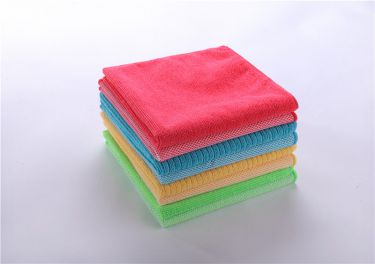
Private label microfiber towels help sports brands offer fast-drying, compact, and branded products without building their own factory. Athletes need a reliable sports towel that can absorb sweat during training and dry quickly after use. The right quick-dry towel can also reduce packing space for gyms, clubs, and outdoor events.
Microfiber fabric uses fine polyester and polyamide fibers to create a large surface area for moisture collection. A well-made gym towel can absorb several times its own weight in water while staying lighter than many cotton towels.
For global brands, the main challenge is not only fabric selection. It also includes color matching, logo printing, size control, packaging, compliance, and delivery planning. This guide explains how an OEM supplier such as Kaiyuan can support a complete private label microfiber towel program.
Private label microfiber towels give global sports brands a flexible way to create customized products with controlled fabric weight, size, color, logo, packaging, and quality standards. An OEM partner can manage the process from fabric development and sample approval to mass production and export. For sports use, the best towels usually combine 80/20 polyester-polyamide microfiber, a fabric weight of about 180 to 320 GSM, strong absorbency, fast drying, colorfast printing, and compact packaging.
Microfiber contains very fine filaments. These filaments create small spaces that collect sweat, water, and light dirt. A 200 GSM microfiber towel can provide a useful balance between absorbency and portability. Heavier towels from 280 to 350 GSM feel thicker and may suit premium gym, golf, and travel collections.
Many microfiber towels use an 80/20 polyester-polyamide blend. Polyester supports strength, shape retention, and color stability. Polyamide improves softness and moisture absorption. The final performance depends on fiber diameter, knitting or weaving method, pile height, edge construction, and finishing treatment.
A sports towel must dry between uses. Microfiber generally releases moisture faster than thick cotton when the towel is spread in a ventilated area. Faster drying can help reduce odor caused by long periods of damp storage.
Drying performance is affected by air movement, temperature, humidity, and fabric thickness. A useful product specification should state the fabric weight, dimensions, care instructions, and expected drying conditions instead of using only terms such as ultra-fast or super absorbent.
A 40 x 80 centimeter microfiber towel can fold into a small pouch. This makes it suitable for sports bags, airline travel, races, fitness classes, and outdoor activities. A towel with a hanging loop or mesh storage bag can improve daily convenience.
Sports towels often receive frequent washing and rubbing. The decoration method should match the product material and use case.
| Logo method | Best use | Typical control points | Production consideration |
|---|---|---|---|
| Embroidery | Premium gym towels and club gifts | Thread tension, stitch density, edge pull | Adds weight and may reduce softness under the logo |
| Screen printing | Simple logos and large orders | Ink coverage, curing temperature, color accuracy | Works well for bold graphics |
| Heat transfer | Detailed logos and short runs | Heat, pressure, time, peeling resistance | Requires a suitable transfer film |
| Sublimation | Polyester-rich towels with full-color designs | Color profile, press temperature, image resolution | Best for white or light-colored polyester surfaces |
| Jacquard weaving | Long-term woven brand identity | Pattern alignment, yarn tension, repeat accuracy | Usually requires a higher minimum order |
| Application | Suggested size | Suggested GSM | Useful features |
|---|---|---|---|
| Fitness and gym training | 30 x 50 cm or 40 x 80 cm | 200 to 300 GSM | High absorbency, hanging loop, branded label |
| Running and cycling | 25 x 50 cm or 30 x 80 cm | 160 to 220 GSM | Low weight, compact pouch, quick drying |
| Golf | 40 x 60 cm or 40 x 80 cm | 250 to 350 GSM | Thicker pile, corner hook, strong edge stitching |
| Swimming and water sports | 60 x 120 cm or 70 x 140 cm | 280 to 400 GSM | High water absorption, larger coverage, soft finish |
| Yoga and outdoor travel | 40 x 80 cm or 50 x 100 cm | 180 to 260 GSM | Lightweight design, storage bag, low-lint finish |
| Race and event promotion | 30 x 50 cm | 160 to 220 GSM | Full-color printing, event packaging, scalable output |
GSM means grams per square meter. It is a direct measure of fabric weight. A higher GSM usually creates a thicker and more substantial towel. It can also increase drying time, shipping weight, and material cost.
For example, if a 40 x 80 centimeter towel weighs 64 grams, its approximate fabric weight is 200 GSM before accounting for labels, decoration, and packaging. Brands should confirm the finished weight after sewing and printing because these processes can change the final product weight.
A clear production process reduces errors and helps brands plan product launches. The following flow is suitable for a custom microfiber towel order.
Product brief
Then
Design and quotation
Then
Fabric and color approval
Then
Prototype sample
Then
Laboratory and physical testing
Then
Pre-production approval
Then
Bulk manufacturing
Then
Final quality inspection
Then
Packaging and export
Quality control should use measurable limits. A supplier should not rely only on visual inspection. The inspection plan should cover both the fabric and the finished towel.
| Inspection item | Example control target | Inspection method |
|---|---|---|
| Length and width | Written tolerance, such as plus or minus 1 to 2 cm | Measure at three points with a calibrated ruler |
| Fabric weight | Approved GSM range | Cut and weigh a defined area or weigh the finished towel |
| Color difference | Approved sample or measured Delta E limit | Light box review and instrument reading when required |
| Seam quality | No skipped stitches, open seams, or loose threads | Visual inspection and manual seam pull check |
| Logo position | Approved position tolerance, such as plus or minus 5 mm | Measure from the finished edges |
| Wash durability | Logo and fabric remain acceptable after agreed cycles | Domestic wash test based on the approved care method |
| Absorbency | Target defined during sample approval | Water drop, immersion, or timed absorption test |
| Packaging | Correct quantity, labels, carton marks, and barcode data | Carton-by-carton or sampling inspection |
Brands can request tests based on the destination market and product claims. Textile laboratories may use recognized methods for dimensional change, colorfastness, pH value, fiber content, formaldehyde, and restricted substances. Common compliance programs include OEKO-TEX Standard 100, REACH-related chemical controls, and ISO 9001-based quality management.
The test plan should be agreed before production. For example, a brand may require colorfastness to washing at 40 degrees Celsius, colorfastness to rubbing, a pH range suitable for skin contact, and restricted substance screening. The exact limits should follow the destination market and the brand's legal requirements.
Kaiyuan can be included as a manufacturing partner during product planning, sampling, quality control, and export preparation. A useful OEM service should provide more than a finished towel. It should provide clear technical documents and repeatable production control.
A structured R and D program can reduce changes after bulk production starts. Brands may also request a sample set covering lightweight, standard, and premium constructions. This allows buyers to compare hand feel, absorption, drying speed, and retail price before selecting one product.
For international orders, delivery performance depends on more than sewing capacity. The supplier should coordinate raw material purchasing, fabric inspection, logo production, packing materials, carton loading, and export documents. A written production schedule can divide the order into milestones such as material approval, cutting completion, decoration completion, final inspection, and shipment release.
Brands should also confirm the minimum order quantity. Some products may require 500 to 1,000 pieces for standard colors and sizes. Custom colors, special packaging, woven designs, and complex shapes may require a higher quantity. The actual MOQ should be quoted after reviewing the product design.
Packaging affects both product protection and shelf presentation. A sports towel may be sold through gyms, sporting goods stores, online marketplaces, race events, or corporate gift programs. Each channel may require a different package size and information set.
Compact packaging can reduce warehouse volume. However, the towel must be completely dry before sealed packing. Excess moisture inside a plastic pouch can lead to odor and quality complaints during storage.
| Question | Why it matters |
|---|---|
| What fabric blend and GSM will be used? | These factors influence absorption, softness, weight, and price. |
| How will the logo be tested? | Testing helps reduce peeling, fading, cracking, and thread damage. |
| What is the acceptable size tolerance? | Clear tolerances prevent disputes during inspection. |
| Which compliance tests are available? | Different markets have different textile and chemical requirements. |
| How is the final order inspected? | A documented inspection process identifies defects before shipment. |
| How are repeat colors controlled? | Color records help maintain brand consistency across orders. |
Private label microfiber towels give global sports brands a practical way to launch branded products with controlled cost and performance. Brands can choose the fiber blend, GSM, size, logo method, packaging, and compliance plan for each market. A reliable OEM partner should support product development, measurable testing, quality inspection, and export preparation. With a clear specification and a controlled production process, Kaiyuan and other qualified manufacturers can help turn a sports towel concept into a consistent private label product.
IF YOU LIKE OUR PRODUCTS, PLEASE CONTACT US
By putting customers ahead, relying on high quality, benefiting from management and contributing to society, people at Kaiyuan are improving constantly with active innovation. We hope to be your companion on the road to success in the near future.
SUBMIT
+ 86 319 6122 556
+86 159 3119 2573
+ 86 319 6122 556
No.2 North Ring Road Economic Development Zone Wei County, Xingtai, Hebei, China. 051130