Oct. 15, 2026
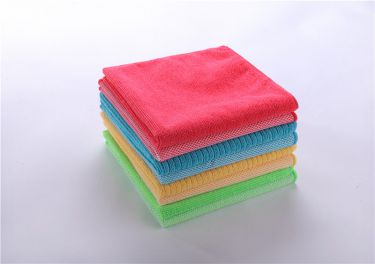
Microfiber Towels for Sports help athletes manage sweat, water, and limited packing space during outdoor activities. A wet cotton towel can stay damp for hours, while a microfiber sports towel can dry faster between training sessions. This makes it useful for trail running, hiking, swimming, cycling, and camping. The fabric also supports moisture wicking and sweat absorption without adding much weight. Many users now want a compact travel towel that fits inside a small gym bag or backpack. This article explains how quick drying microfiber towels work, how they compare with cotton, and what quality data buyers should check.
Quick drying microfiber towels are popular for outdoor sports because they absorb water efficiently, dry faster than many cotton towels, weigh less, and take up less space. A towel made with 80 percent polyester and 20 percent polyamide can provide a useful balance of absorbency, softness, strength, and fast drying performance. For hiking, cycling, swimming, and gym training, the best quick drying microfiber towel for hiking or travel should be tested for absorbency, drying time, colorfastness, seam strength, and repeated washing performance.
Microfiber yarns contain many fine filaments. A common microfiber has a fiber diameter below 10 micrometers. Some split microfiber constructions use filaments below 1 denier. These fine fibers create a large surface area and small spaces that hold water.
In practical use, a 300 GSM microfiber sports towel can absorb sweat from the face and neck without feeling as heavy as a thick cotton towel. The exact result depends on the blend, knitting method, finishing treatment, and towel size.
A 40 cm by 80 cm microfiber towel may weigh about 90 to 150 grams when made at 200 to 300 GSM. A cotton towel of a similar size can weigh about 180 to 300 grams, depending on its loop structure.
This difference matters when users carry water, food, clothing, and safety equipment. A lightweight microfiber towel for travel can be folded or rolled into a storage pouch. It may occupy less than half the space of a similar cotton towel.
Quick drying depends on water retention, exposed surface area, air movement, temperature, and humidity. In controlled internal testing, a 30 cm by 60 cm microfiber towel at 250 GSM may reach a dry-to-touch condition in about 60 to 120 minutes at 20 to 25 degrees Celsius with normal air movement. A similar cotton towel may need 180 to 300 minutes under the same conditions.
These figures are test examples, not a universal guarantee. Outdoor conditions can change the result. Wind and low humidity speed up drying. Cold and humid weather slow it down.
Most sports microfiber towels use polyester, polyamide, or a blend of both. Polyester supports strength, shape retention, and fast drying. Polyamide improves softness and water absorption.
| Material composition | Common performance profile | Suitable use |
|---|---|---|
| 100 percent polyester | Fast drying, strong, lower water absorption than blended microfiber | Gym training, cleaning sweat, general outdoor use | 80 percent polyester and 20 percent polyamide | Balanced absorbency, softness, strength, and drying speed | Hiking, cycling, swimming, and travel |
| 70 percent polyester and 30 percent polyamide | Higher softness and absorbency, with slightly more water retention | Face towels, swimming, and personal care |
| Microfiber with waffle texture | More exposed surface area and improved air circulation | High-sweat sports and camping |
GSM means grams per square meter. It helps buyers compare fabric weight.
| GSM range | Approximate use | Benefits |
|---|---|---|
| 180 to 220 GSM | Running, cycling, and gym workouts | Very light and fast drying |
| 230 to 320 GSM | Hiking, travel, and daily training | Balanced absorbency and weight |
| 330 to 450 GSM | Swimming, showering, and camping | Higher absorbency and softer hand feel |
A 30 cm by 50 cm towel works well as a face or hand towel. A 40 cm by 80 cm towel is suitable for most gym and hiking needs. A 70 cm by 140 cm towel provides more body coverage but needs more time and space to dry.
Both microfiber and cotton towels have useful applications. The better choice depends on the sport, weather, and packing needs.
| Comparison point | Microfiber towel | Cotton towel |
|---|---|---|
| Drying time | Usually shorter because the fabric is thin and spreads water across many fine fibers | Usually longer because cotton loops can hold more water |
| Weight | Often 90 to 150 grams for a medium sports size | Often 180 to 300 grams for a similar size |
| Packing volume | Small and easy to compress | Larger, especially when damp |
| Absorbency | High for its weight, depending on the polyamide content | High, with greater water retention |
| Outdoor convenience | Good for travel, hiking, cycling, and camping | Good when drying space and luggage space are available |
| Surface feel | Smooth, soft, or textured, depending on the finish | Natural and looped |
A damp towel inside a closed backpack can develop an unpleasant smell. It can also add weight. A quick-dry hiking towel can be hung on the outside of a pack between uses. The towel should have a reinforced hanging loop and enough airflow around the fabric.
Drying speed does not remove the need for cleaning. Users should wash the towel after heavy sweating, contact with mud, or use in shared facilities.
A best quick drying microfiber towel for hiking should balance size, absorbency, and weight. A 40 cm by 80 cm towel at 250 to 300 GSM is a practical choice for many hikers. It can be used for sweat, hand washing, or light cleaning.
For multi-day trips, two smaller towels may be more useful than one large towel. One can be used for the body. The other can remain clean for the face or hands.
An absorbent gym towel usually needs a size of 30 cm by 50 cm or 40 cm by 80 cm. A 200 to 280 GSM fabric can reduce bag weight while still handling sweat from a 45 to 90 minute workout.
For shared gym equipment, use a separate towel for wiping equipment and personal use. This reduces cross-contact between surfaces.
A swimming microfiber towel can replace a bulky bath towel when locker space is limited. A larger 70 cm by 140 cm design offers more coverage. A smaller 40 cm by 80 cm design dries faster and takes less space.
A compact camping towel can serve several purposes. It can dry hands, wipe condensation, or provide a clean surface for personal items. A storage bag with ventilation holes helps prevent moisture from staying trapped after use.
Absorbency should be measured instead of judged only by touch. A basic test can record the dry weight and wet weight of a conditioned sample.
For example, if a 100 gram towel weighs 320 grams after testing, it has gained 220 grams of water. The result should include the test temperature, water time, draining time, and towel size.
A drying test should use the same towel size, water loading, temperature, humidity, and airflow for every sample. A laboratory can use a precision balance with 0.01 gram readability. Measurements can be recorded every 10 or 15 minutes.
Useful records include:
Seam strength is important because outdoor users often pull towels from tight bags. Testing can refer to ASTM D5034 for fabric grab strength and ISO 13935-2 for seam tensile properties. A manufacturer can also check dimensional change after repeated washing using ISO 6330 washing procedures and ISO 5077 measurement methods.
A practical production target is to keep shrinkage below 5 percent after 30 home laundering cycles. The actual target should be confirmed for each fabric construction and finishing process.
Outdoor towels are often exposed to sweat, sunscreen, chlorine, and sunlight. Quality inspection may include colorfastness to washing, rubbing, perspiration, and light. A buyer can request test records based on ISO 105 series methods.
For products sold in international markets, factories should also screen restricted substances. OEKO-TEX Standard 100 certification is one recognized framework for testing harmful substances in textile products. Certification status should be verified for the exact product and production site.
The following process helps maintain absorbency and reduce odor.
Use towel during sport
Then remove loose dirt and excess water
Then hang fully open in moving air
Then wash with mild detergent
Then rinse completely
Then air dry before storage
Fabric softener can coat microfiber filaments and reduce water absorption. High heat can damage fine fibers or weaken elastic loops. Always follow the product care label because blends and finishes can differ.
Kaiyuan can develop microfiber towels for sports by controlling fiber blend, GSM, size, edge binding, color, printing, and packaging. A structured development process can reduce performance variation between samples and bulk orders.
A practical development program can include three sample rounds. The first round confirms the fabric blend and size. The second round checks absorbency, drying time, color, and sewing. The third round verifies packaging and mass production readiness.
Each production lot should be checked for measurable items such as:
For custom orders, buyers should define the product size, blend ratio, GSM, color standard, logo method, care label, packing method, and acceptable quality limit before production. An inspection plan may use an AQL system for visual defects. The exact sampling level should be agreed by the buyer and factory before inspection.
| User need | Recommended design | Reason |
|---|---|---|
| Daily running | 30 cm by 50 cm, 180 to 240 GSM | Low weight and fast drying |
| Gym workouts | 40 cm by 80 cm, 220 to 300 GSM | More coverage and good sweat absorption |
| Day hiking | 40 cm by 80 cm, 250 to 320 GSM | Balanced size, absorbency, and packability |
| Multi-day backpacking | 30 cm by 50 cm, 180 to 250 GSM | Reduced weight and shorter drying time |
| Swimming | 70 cm by 140 cm, 300 to 450 GSM | Greater body coverage |
| Camping | 40 cm by 80 cm, 250 to 350 GSM with hanging loop | Useful for washing, drying, and general camp tasks |
Quick drying microfiber towels are popular for outdoor sports because they combine useful absorbency with low weight, compact storage, and shorter drying times. The best product depends on the sport and the user's packing needs. Runners may prefer a 180 to 240 GSM towel. Hikers often need a 250 to 320 GSM design. Swimmers may choose a larger towel with higher GSM.
When comparing microfiber towels for sports, check more than softness. Review the fiber blend, GSM, size, seam quality, absorbency data, drying test method, washing results, and colorfastness. With proper care and reliable quality inspection, a microfiber sports towel can remain a practical part of hiking, gym, camping, swimming, and travel equipment.
Microfiber Towels vs Cotton Towels: Which Is Better for Commercial Cleaning?
Private Label Microfiber Towels: OEM Solutions for Global Brands
IF YOU LIKE OUR PRODUCTS, PLEASE CONTACT US
By putting customers ahead, relying on high quality, benefiting from management and contributing to society, people at Kaiyuan are improving constantly with active innovation. We hope to be your companion on the road to success in the near future.
SUBMIT
+ 86 319 6122 556
+86 159 3119 2573
+ 86 319 6122 556
No.2 North Ring Road Economic Development Zone Wei County, Xingtai, Hebei, China. 051130