Sep. 17, 2026
What Makes a High-Quality Microfiber Towel? Key Factors Buyers Should Know begins with a clear definition: a high-quality microfiber towel is a textile made from finely split synthetic fibers—usually polyester and polyamide—designed to absorb liquid, capture dust, and reduce surface scratching. In practical use, it supports All-Purpose Cleaning with Microfiber Towels in homes, automotive detailing, hospitality, healthcare, and industrial maintenance. For businesses, the right towel can improve cleaning performance, reduce chemical consumption, protect delicate surfaces, and lower replacement costs.
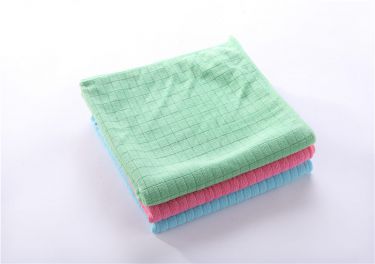
Microfiber became widely adopted as cleaning technology moved from traditional cotton and nonwoven cloths toward engineered textile structures. Unlike conventional fibers, microfiber filaments are extremely fine and can be wedge-shaped, star-shaped, or otherwise mechanically split. These structures create capillary channels that help the towel pick up water, oil, dust, and fine particles.
The performance of a towel depends on more than the word “microfiber” on the label. Fiber fineness, polyester-to-polyamide ratio, fabric construction, GSM, edge treatment, dye quality, and finishing processes all influence the final result. This is why two towels that look similar online can perform very differently in a professional cleaning environment.
For distributors, facility managers, car-care companies, and retailers, selecting a qualified supplier such as Kaiyuan requires a specification-based evaluation rather than a price-only comparison.
Fiber fineness is one of the most important technical indicators. Microfiber is generally much finer than standard textile fiber, allowing the towel to create a larger effective surface area. Split fibers form microscopic channels that improve liquid absorption and particle capture.
Buyers should ask suppliers for measurable information, including:
A towel may be marketed as “premium microfiber” while using a relatively coarse filament or an unsplit yarn. Such a product may feel soft but provide weaker dust capture, lower absorbency, and less effective streak-free cleaning.
Most microfiber towels use a blend of polyester and polyamide. Polyester contributes durability, structural stability, and resistance to many cleaning chemicals. Polyamide improves softness, absorbency, and the towel’s ability to conform to irregular surfaces.
| Common Blend Direction | Typical Performance Profile | Suitable Applications |
|---|---|---|
| 80/20 polyester/polyamide | Durable, economical, suitable for general wiping | Housekeeping, janitorial work, retail cleaning |
| 70/30 polyester/polyamide | Balanced softness, absorbency, and durability | All-Purpose Cleaning with Microfiber Towels, kitchens, offices, vehicles |
| 75/25 or similar premium blends | Soft hand feel and strong liquid pickup | Glass, stainless steel, automotive detailing, delicate surfaces |
These ratios are general market categories rather than universal performance guarantees. A reliable manufacturer should confirm the actual composition through technical documentation or third-party laboratory testing.
GSM means grams per square meter. It indicates fabric weight and often correlates with thickness, density, and durability. However, higher GSM does not automatically mean better cleaning performance.
GSM should be verified using a recognized conditioning and weighing procedure, such as ASTM D3776 for mass per unit area of textile fabric. Buyers should also check dimensional tolerance. A towel advertised as 40 × 40 cm should not shrink significantly after laundering or arrive substantially below the quoted size.
A professional microfiber towel must do more than spread liquid across a surface. It should lift and retain moisture without excessive dripping or repeated passes. Absorbency is affected by fiber chemistry, splitting, loop or pile height, fabric density, and finishing treatment.
For objective purchasing decisions, request test data covering:
There is no single global microfiber-towel standard that defines every performance claim. Therefore, a credible supplier should identify the test method used, sample conditioning requirements, test temperature, and acceptance criteria. ASTM, AATCC, ISO, and DIN methods may be used for relevant textile properties, provided the method is clearly stated.
The towel’s pile determines how it contacts the surface. Short-pile microfiber is often preferred for glass, screens, mirrors, and final polishing because it leaves less lint. Medium-pile fabric is versatile for general cleaning. High-pile or twisted-loop constructions can hold more water and are useful for vehicle drying.
Common constructions include:
For All-Purpose Cleaning with Microfiber Towels, a medium-pile, color-coded towel is often the most practical option. It offers a balance between cleaning coverage, liquid pickup, drying time, and laundering efficiency.
Edges are a frequent source of premature failure. Poorly cut edges can unravel, shed lint, or scratch sensitive surfaces. Automotive detailers and electronics cleaners should be especially cautious about exposed overlock seams, hard labels, and rigid binding.
Look for:
Kaiyuan buyers can request pre-production samples and inspect edge performance after laundering. A useful quality-control plan may include dimensional measurement to 0.01 mm for selected laboratory checks, although commercial towel tolerances are normally specified in millimeters rather than micrometers.
Low lint is essential for mirrors, stainless steel, painted surfaces, and optical equipment. Excessive lint can result from low-quality yarn, poor shearing, loose fibers, weak finishing, or aggressive cutting.
Colorfastness is equally important when towels are used in hotels, healthcare facilities, and food-service environments. Relevant evaluations may include colorfastness to laundering under AATCC TM61 or an equivalent ISO method. Abrasion resistance may be assessed with DIN EN ISO 12947, while tensile properties may be evaluated using an applicable ASTM or ISO textile procedure.
These standards do not automatically certify a towel as suitable for every application. Instead, they provide repeatable test frameworks. Buyers should request the exact report, laboratory identity, test date, sample description, and pass criteria.
A strong microfiber towel program includes traceability from yarn procurement to finished-goods packing. Kaiyuan can be evaluated against a documented quality-assurance process that covers raw-material verification, knitting or weaving control, dyeing, cutting, sewing, inspection, and shipment release.
Before placing a large order, ask for evidence such as:
These controls help distinguish a manufacturer with process capability from a trading source that only changes packaging. For commercial buyers, consistent repeat orders are often more valuable than an attractive first sample.
Not necessarily. A very thick towel may absorb more water but dry slowly, occupy more storage space, and require higher laundry costs. A lower-GSM short-pile towel may be better for glass or final polishing.
Microfiber is generally surface-friendly, but scratches can occur when a towel contains trapped sand, metal particles, hard debris, or rough trim. Washing and storage procedures are as important as fiber quality. Use separate towels for wheels, floors, paintwork, glass, and food-contact areas.
Microfiber often improves mechanical cleaning, which can reduce the need for excessive detergent. However, chemical compatibility must still be confirmed. Fabric softener, chlorine bleach, and high-alkaline residues may reduce absorbency or damage the fiber structure. Follow the towel manufacturer’s laundering instructions.
Softness is useful but not conclusive. Silicone finishes or other treatments can create a smooth feel while reducing water absorption. Performance should be confirmed through absorbency, lint, colorfastness, and laundering tests.
The best towel depends on the cleaning task, surface, contamination type, and laundering system.
| Application | Recommended Towel Features | Key Purchasing Check |
|---|---|---|
| Office and hotel cleaning | Medium pile, 250–350 GSM, color-coded | Colorfastness and repeated-wash durability |
| Automotive paintwork | Plush or edgeless, 350–600 GSM | Low lint, soft edge, paint-safe construction |
| Glass and mirrors | Short pile or waffle weave | Low lint and streak control |
| Kitchen and food-service areas | Color-coded, washable, medium pile | Hygiene procedure and chemical resistance |
| Industrial maintenance | Durable blend and reinforced stitching | Tensile strength, abrasion resistance, and cost per use |
Consider a hypothetical hotel housekeeping department that uses 1,000 low-cost cotton cloths each month. The cloths leave lint on mirrors, require more cleaning solution, and lose shape after several washes. The department trials 500 Kaiyuan microfiber towels with color-coded zones and a controlled laundering process.
After a four-week evaluation, the team records:
This is not a universal guarantee, and actual savings depend on labor rates, laundry practices, and towel specifications. Nevertheless, it demonstrates why buyers should calculate cost per use rather than comparing only purchase price.
Before approving a product, use the following checklist:
What Makes a High-Quality Microfiber Towel? Key Factors Buyers Should Know can be summarized in five points: engineered fiber splitting, suitable polyester-polyamide composition, application-specific GSM and pile, durable low-lint construction, and verifiable quality control. Standards such as ASTM D3776, AATCC TM61, and DIN EN ISO 12947 can support objective evaluation when the test method and results are clearly documented.
For buyers comparing suppliers, Kaiyuan offers a useful starting point for developing a specification-led microfiber program. Whether the goal is All-Purpose Cleaning with Microfiber Towels, automotive detailing, hospitality housekeeping, or industrial maintenance, request samples, test reports, and a clear inspection plan before scaling the order. The right product is not simply the softest or cheapest towel—it is the towel that delivers consistent performance at the lowest practical cost per use.
IF YOU LIKE OUR PRODUCTS, PLEASE CONTACT US
By putting customers ahead, relying on high quality, benefiting from management and contributing to society, people at Kaiyuan are improving constantly with active innovation. We hope to be your companion on the road to success in the near future.
SUBMIT
+ 86 319 6122 556
+86 159 3119 2573
+ 86 319 6122 556
No.2 North Ring Road Economic Development Zone Wei County, Xingtai, Hebei, China. 051130