Sep. 28, 2026
To choose the right microfiber towel for professional cleaning, match the towel’s GSM, fiber construction, edge design, absorbency, and color to the surface and cleaning chemical. A suitable towel for Microfiber Towels for Bathroom Cleaning is not always suitable for glass, stainless steel, healthcare surfaces, or floor maintenance. This guide explains how to select the best microfiber towel for commercial cleaning, avoid cross-contamination, compare split fibers, and test capillary action before placing a bulk order from a supplier such as Kaiyuan.
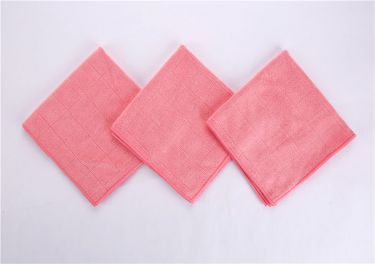
Professional cleaning teams often face four practical problems: streaks on glass, lint on polished surfaces, poor liquid pickup, and cross-contamination between toilets, sinks, kitchens, and general areas. A single towel specification rarely solves all four.
Microfiber is normally made from very fine synthetic filaments, commonly polyester and polyamide. During manufacturing, some fibers are split to create more surface structure. That structure helps the cloth hold liquid and capture soil through mechanical action, but performance still depends on fiber blend, weave, GSM, laundering, and the surface being cleaned.
For example, a low-pile towel may leave fewer fibers behind on mirrors, while a higher-pile towel can hold more cleaning solution for general surface work. A towel with a dense woven face may be preferable for stainless steel, whereas a looped or terry construction may be more useful for liquid pickup.
| Application | Useful towel characteristics | What to avoid |
|---|---|---|
| Mirrors and glass | Low-lint, low-pile or glass-weave face; clean edge; dedicated color | Fabric softener residue, oily towels, loose overlock threads |
| Bathroom basins and fittings | Medium pile, good liquid pickup, durable hem, color assigned to sanitary areas | Using the same towel on toilets and hand-contact fittings |
| Toilets and floor-level areas | Separate color, absorbent construction, chemical-resistant fibers | Returning the towel to clean-surface work after use |
| Stainless steel | Low-lint woven surface and a clean, dry finishing towel | High-oil residues or abrasive particles trapped in the fabric |
| General office surfaces | Medium-weight, washable towel suitable for damp wiping | One towel used across kitchens, washrooms, and desks |
Microfiber should not be treated as a disinfectant by itself. The U.S. Centers for Disease Control and Prevention states that environmental cleaning requires the correct product, contact time, mechanical cleaning, and a suitable laundry process. The CDC’s Guidelines for Environmental Infection Control in Health-Care Facilities discusses microfiber cleaning materials as part of environmental cleaning practice, while also emphasizing correct laundering and replacement of contaminated materials.
A documented user case is the University of Washington’s custodial program, which has publicly described the use of microfiber cleaning systems within its green-cleaning operations. The program’s published materials emphasize color coding, controlled chemical use, and laundering procedures rather than treating every towel as interchangeable. This is a useful operational lesson: the benefit comes from the entire system—towel selection, training, storage, and laundry—not from the word “microfiber” on the label.
For infection-control work, consult the current CDC guidance, your local health authority, and the chemical manufacturer’s label. Do not copy a performance claim from a towel brochure unless the supplier provides a test method, test conditions, and an independent report.
GSM means grams per square metre. It describes fabric mass, not automatic cleaning quality. A higher GSM can indicate more material and liquid-holding capacity, but a dense low-GSM woven towel may outperform a thick towel on glass if it produces less lint and leaves fewer finishing marks.
Use GSM as a comparison point, then inspect the construction:
Ask the supplier to state GSM according to a recognized fabric-mass method, such as ASTM D3776 or an equivalent ISO test. Compare samples with the same dimensions because a larger towel can feel heavier without having a higher GSM.
Denier describes linear density of a fiber. Finer filaments can create a larger effective surface area, but the final result also depends on whether the filaments are split and how the yarn is knitted or woven.
Request these details from a supplier:
Terms such as “premium,” “ultra-absorbent,” or “lint-free” are not sufficient evidence. A professional buyer should request a sample and evaluate lint, streaking, liquid pickup, seam behavior, and shrinkage after laundering.
Color coding is an operational control, not a performance feature. Create a written site policy before ordering:
Use labels, laundry bags, and storage bins as well as colored fabric. Color coding cannot prevent cross-contamination if used towels are placed together or if employees ignore the assignment.
Before testing or deploying commercial microfiber towels, prepare the following:
Do not perform a chemical compatibility test with an unknown product. Confirm the manufacturer’s dilution, contact time, ventilation, and personal protective equipment requirements first.
Tools: Site map, room checklist, surface list, and current chemical inventory.
Action: List each surface separately: glass, chrome, ceramic, painted walls, stainless steel, desks, floors, toilets, and food-service areas. Record whether the towel will be used dry, damp, or wet.
Parameters: Record soil type, required finish, chemical used, color assignment, and whether the area has infection-control or food-safety requirements.
Check: Every towel in the proposed order should have a defined job. If one towel is assigned to toilets, mirrors, and desks, the system is not sufficiently controlled.
Failure fix: Divide the work into task groups and assign a separate towel specification or color to each group.
Tools: Cleaning specifications, customer complaints, inspection records, and towel samples.
Action: Translate complaints into measurable requirements. “Leaves streaks” becomes a glass-finish test. “Does not absorb” becomes a liquid-pickup comparison. “Wears out quickly” becomes a laundering and seam-inspection record.
Parameters: Specify acceptable lint level, visible streaks, edge damage, dimensional change, and number of washes for the trial. The acceptance limits should be agreed before the test rather than changed after viewing the results.
Check: Have the supervisor and cleaner review the same samples under the same lighting.
Failure fix: If the requirement cannot be measured, rewrite it as an observable result, such as “no visible lint under the site’s normal inspection lighting.”
Tools: Supplier questionnaire and sample approval form.
Action: Ask Kaiyuan or another supplier for GSM, blend, dimensions, construction, edge method, colorfastness information, care instructions, and any third-party test reports.
Parameters: Require the supplier to identify the test method and conditioning used for each reported value. A number without a method is difficult to compare.
Check: Confirm that the sample, data sheet, and quotation describe the same product code. Check the dimensions after washing if the towel will be laundered repeatedly.
Failure fix: Reject vague claims such as “industrial strength” unless the supplier explains the construction and supplies evidence relevant to your use.
Tools: Glass panel, selected towels, measured cleaning solution, timer, inspection light, and clean gloves.
Action: Clean equal sections of the same glass using the same soil, chemical dilution, wiping pattern, and number of passes. Use a separate dry finishing towel where that is part of the normal procedure.
Parameters: Keep towel size, solution volume, operator, contact time, and drying time consistent. Do not compare a new towel with a previously laundered towel unless that difference is intentional.
Check: Inspect for haze, streaks, lint, edge marks, and retained odor under the site’s normal lighting.
Failure fix: If streaks appear, check chemical over-application, hard-water residue, fabric-softener contamination, and whether the towel was fully rinsed. Change the towel construction only after eliminating process causes.
Tools: Clean tray, measured water, scale, timer, and towel sample.
Action: Weigh a dry towel, apply a controlled amount of water, allow the towel to absorb under a consistent procedure, then weigh it again. Record the difference as a comparative result for that towel group.
Parameters: Use the same towel dimensions, water temperature, contact time, and drainage method for every sample. This is an internal comparison, not a certified absorbency claim.
Check: Note whether the towel absorbs evenly, releases liquid during wiping, leaves pooling, or becomes difficult to control when saturated.
Failure fix: If the towel wets unevenly, wash it without softener and repeat the test. If the issue remains, compare a different weave or blend.
Tools: Product labels, safety data sheets, test panels, gloves, eye protection, and ventilation controls.
Action: Use only the approved chemical dilution. Test the towel on an inconspicuous area and rinse or dispose of the test material according to the chemical instructions.
Parameters: Follow the label contact time and do not mix chemicals. Pay special attention to bleach, quaternary ammonium compounds, acids, solvents, and high-alkaline products because compatibility varies by formula and laundering method.
Check: Look for color bleed, loss of softness, fiber damage, odor retention, surface discoloration, and reduced absorbency.
Failure fix: If a towel reacts with the approved chemical, stop using that combination and obtain the supplier’s compatibility guidance. Never solve a chemical reaction by increasing dilution or adding another product without authorization.
Tools: Commercial washer, approved detergent, separate laundry bags, drying equipment, and inspection form.
Action: Wash the sample according to the towel manufacturer’s instructions and your facility’s validated laundry process. Keep colors and contamination categories separate.
Parameters: Record wash temperature, detergent, cycle, load type, drying method, and any use of softener or bleach. Fabric softeners can coat fibers and reduce absorbency; follow the supplier’s care instructions.
Check: After drying, inspect dimensions, seams, lint, odor, absorbency, and surface feel. Compare the washed towel with the unused control sample.
Failure fix: If absorbency drops, review detergent dosing, residual chemicals, overloading, incomplete rinsing, and fabric-softener use before changing the towel.
Tools: Approved-product register, color chart, storage labels, staff training sheet, and replacement log.
Action: Assign each approved towel a product code, color, task, laundry route, and replacement condition.
Parameters: Define replacement triggers such as torn edges, embedded grit, persistent odor, visible staining that cannot be removed, or loss of cleaning performance.
Check: Conduct periodic spot checks. Confirm that used towels are not stored with clean towels and that each color remains assigned to its intended area.
Failure fix: If misuse continues, simplify the color system, place labeled bins at the point of use, and retrain staff using real examples from the site.
Problem: A buyer selects the heaviest towel believing it must absorb or clean better.
Solution: Compare GSM with weave, fiber blend, pile height, edge construction, and actual surface tests. Choose the lowest specification that meets the measured requirement and remains durable in the laundry process.
Problem: The same cloth moves from a toilet area to a desk or food-service surface.
Solution: Use color coding supported by written procedures, labeled laundry bags, and supervisor checks. Replace any towel whose task history is unknown.
Problem: Excess solution leaves residue and causes streaks, particularly on glass, mirrors, and polished metal.
Solution: Measure dilution, control the amount applied, follow label contact time, and use a clean finishing towel. A thicker towel cannot compensate for incorrect chemical dosing.
Problem: The towel feels soft but picks up less water and leaves a film.
Solution: Follow the towel manufacturer’s laundry instructions. Run a controlled wash without softener and compare absorbency with an untreated sample.
Problem: A towel used on floors or heavily soiled areas is reused on glossy surfaces and creates fine scratches or marks.
Solution: Separate high-soil towels from polishing towels. Inspect and launder them separately, and discard towels that retain abrasive particles.
Problem: The label promises lint-free performance, but the cloth leaves fibers under the site’s lighting.
Solution: Test the actual product on dark and reflective surfaces after laundering. Request an independent test report if lint performance is critical.
A professional purchase specification should include more than product color and size. Include:
For a Kaiyuan quotation, send the supplier your intended surfaces, chemical types, color system, washing method, and trial acceptance criteria. This gives the manufacturer enough information to recommend a construction rather than simply offering the lowest unit price.
The best microfiber towel for commercial cleaning is the one that performs consistently for a defined task, survives the site’s laundry process, and supports safe color separation. Compare GSM, fiber blend, denier, split-fiber construction, weave, edge quality, chemical compatibility, and measured results. For how to choose microfiber towels for professional cleaning, begin with the surface and contamination risk, then validate the towel through a controlled sample trial.
For microfiber towels for bathroom cleaning, assign separate colors and laundering routes to toilets, fittings, mirrors, and general areas. For glass, prioritize low-lint finishing performance; for liquid pickup, examine absorbency and release; for healthcare or food-related work, follow the applicable authority and product-label requirements. The most reliable long-term decision combines supplier documentation, on-site testing, trained users, and a replacement policy—not marketing adjectives.
Sources for verification: CDC, Guidelines for Environmental Infection Control in Health-Care Facilities, ; U.S. Environmental Protection Agency, Green Cleaning, Sanitizing, and Disinfecting, ; ASTM D3776, Standard Test Methods for Mass Per Unit Area of Fabric, . Always check the current edition and your local requirements before implementation.
IF YOU LIKE OUR PRODUCTS, PLEASE CONTACT US
By putting customers ahead, relying on high quality, benefiting from management and contributing to society, people at Kaiyuan are improving constantly with active innovation. We hope to be your companion on the road to success in the near future.
SUBMIT
+ 86 319 6122 556
+86 159 3119 2573
+ 86 319 6122 556
No.2 North Ring Road Economic Development Zone Wei County, Xingtai, Hebei, China. 051130