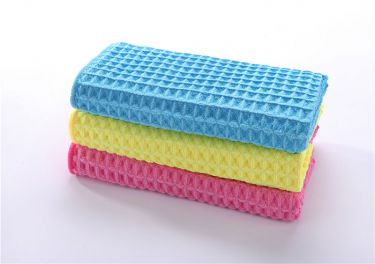
How to Develop Custom Microfiber Towels for Kids Brands
Oct. 01, 2026
Microfiber Children's Products must combine softness, safety, absorbency, durability, attractive design, and reliable production. For a kids brand, developing a custom microfiber towel is not simply a matter of printing a logo on fabric. It requires clear specifications, child-safe material selection, practical testing, compliant packaging, and close supplier control.
This guide explains how purchasing managers, product developers, and brand owners can develop custom microfiber towels with Kaiyuan, from the first product brief to final quality inspection.
Custom microfiber towel development requires coordinated control of fabric, design, production, testing, and packaging.
1. Define the Product Requirements Before Contacting a Supplier
The first purchasing pain point is unclear communication. Many buyers know they want a soft children's towel but have not decided the size, fabric weight, construction, design, or packaging. A complete product brief helps suppliers quote accurately and prevents repeated revisions.
First step: Identify how children will use the towel
Start with the intended use because the use case determines the fabric weight, dimensions, edge construction, and absorbency requirements.
Bath towel for home, hotels, camps, or travel.
Hand towel for schools, daycare centers, restaurants, and family bathrooms.
Beach or pool towel requiring larger dimensions and fast drying.
Hair drying towel requiring a compact shape, elastic loop, or button closure.
Sports towel for children's activities and outdoor programs.
Promotional towel for events, gift boxes, and brand campaigns.
Comfort towel or character towel designed for daily use and brand recognition.
Second step: Define the target age group
Age affects both product safety and product size. A towel for toddlers should not be specified in the same way as a towel for older children.
Infants and toddlers: prioritize lightweight construction, soft edges, low lint, and simple shapes.
Preschool children: use bright designs, easy-to-hold dimensions, and reinforced hanging loops.
School-age children: consider larger sizes, licensed character artwork, sports themes, and stronger durability.
Teenagers: use more mature patterns, larger dimensions, and lifestyle-oriented packaging.
Third step: Prepare a written product specification
Send the supplier a specification sheet containing the following information:
Product name and intended use.
Target age range.
Finished size and acceptable size tolerance.
Fabric composition, such as polyester-polyamide microfiber.
Fabric weight or GSM requirement.
Color references, such as Pantone numbers or approved samples.
Printing method or jacquard requirement.
Logo position and artwork dimensions.
Edge finish, corner shape, and hanging loop requirements.
Packaging format and labeling instructions.
Expected order quantity and target delivery date.
Required safety, chemical, and performance testing.
2. Select a Soft and Safe Microfiber Construction
The second major pain point is uncertainty about fabric quality. Two towels may both be called microfiber, but they can differ greatly in fiber blend, density, softness, absorbency, lint release, drying speed, and colorfastness.
Choose the appropriate fiber blend
Common microfiber towels use a blend of polyester and polyamide. Polyester contributes strength, shape retention, color stability, and quick drying. Polyamide generally improves softness, absorbency, and hand feel.
Polyester-rich microfiber: suitable for economical, quick-drying products.
Polyester-polyamide blend: suitable when softness and absorbency are important.
Higher polyamide content: suitable for premium towels with a softer hand feel.
Recycled polyester option: suitable for sustainability-focused brands when traceability and certification are available.
Choose the correct fabric weight
GSM means grams per square meter and indicates fabric weight. The correct GSM depends on the product use, retail position, and required drying speed.
Lightweight microfiber: suitable for hand towels, travel towels, promotional items, and quick-dry products.
Medium-weight microfiber: suitable for daily bath towels and children's activity towels.
Heavyweight microfiber: suitable for premium bath towels, beach towels, and larger gift sets.
Do not select the highest GSM automatically. A heavier towel may feel more substantial, but it may take longer to dry, cost more to ship, and be harder for small children to carry.
Check the surface structure
The surface construction directly affects softness, appearance, absorbency, and durability.
Plain microfiber: practical for economical towels and simple logo printing.
Coral fleece microfiber: soft and plush, suitable for comfort-focused children's products.
Waffle or honeycomb structure: improves texture and can support faster drying.
Suede microfiber: smooth and compact, suitable for travel or sports towels.
Double-sided construction: allows one side to focus on softness and the other side to focus on absorbency or printing.
Set measurable quality requirements
Replace vague instructions such as "very soft" or "high quality" with measurable or sample-based requirements.
Softness must match the approved reference sample.
No sharp or abrasive edge should be detectable by hand.
No excessive lint should appear after washing.
The towel should absorb water evenly without untreated areas.
The towel should retain its shape after repeated washing.
The surface should not show obvious pulls, holes, stains, or weaving defects.
3. Develop a Child-Friendly Design and Branding System
Kids brands often struggle to balance visual appeal with production limitations. A design that looks attractive on a screen may lose detail when printed on a textured microfiber surface.
First step: Create production-ready artwork
Provide the supplier with editable artwork rather than a low-resolution image whenever possible.
Use vector files for logos, icons, and simple illustrations.
Provide the original color references.
Mark the exact print area and safe margins.
Identify all artwork elements that must remain sharp.
Separate colors when the printing method requires color plates.
Supply a digital mockup showing the design on the finished towel shape.
Second step: Adapt the artwork to the towel surface
Microfiber can absorb or diffuse ink differently from smooth woven fabric. Fine lines, tiny text, and subtle color gradients may lose clarity.
Use bold outlines for small character details.
Avoid text that is too small to read after printing.
Use strong contrast between the background and artwork.
Limit overly complex gradients when the design will be sublimated.
Keep important artwork away from hems and folded edges.
Test the design on the actual fabric before approving mass production.
Third step: Select a suitable customization method
The best decoration method depends on the artwork, order quantity, required color accuracy, and product position.
Dye sublimation: suitable for colorful, photographic, and all-over designs on polyester-rich microfiber.
Digital printing: suitable for detailed artwork, short runs, and multiple designs.
Screen printing: suitable for simple artwork and larger solid-color areas.
Embroidery: suitable for small logos and premium accents, but it may feel less comfortable on children's skin.
Jacquard weaving: suitable for durable patterns built into the fabric structure.
Woven labels: suitable for brand information, care instructions, or size identification.
Fourth step: Consider child safety in the design
Decorative features should not create avoidable hazards.
Avoid detachable small ornaments that could become choking hazards.
Use securely attached hanging loops.
Avoid exposed metal components when a soft construction is possible.
Do not use sharp corners on labels, tags, or packaging inserts.
Make sure printed surfaces do not crack, peel, or transfer color under normal use.
4. Build a Complete Prototype and Sampling Process
Sampling is where purchasing teams can identify most problems before committing to production. Skipping a physical prototype often creates expensive changes after fabric, printing, and packaging have already been approved.
First step: Request a material sample
Ask for several fabric options instead of accepting the first available material. Compare them under the same conditions.
Compare softness when dry and damp.
Compare water absorption speed.
Compare drying time in the same environment.
Check for lint and loose fibers.
Check the thickness and weight against the specification.
Wash each sample before making a final decision.
Second step: Request a color and print strike-off
A strike-off is a small printed sample used to verify color, artwork clarity, and print coverage before a complete prototype is made.
Check the strike-off for:
Color accuracy under natural and indoor light.
Sharpness of logos and character details.
Color bleeding between adjacent areas.
Uneven saturation or visible blank spots.
Print alignment relative to the towel edges.
Hand feel and flexibility of the printed area.
Third step: Approve a physical prototype
The prototype should match the planned production method, fabric, size, edge finish, and packaging as closely as possible.
Use the prototype to verify:
Finished dimensions.
Weight and thickness.
Corner shape and hem width.
Hanging loop position.
Logo scale and placement.
Color appearance on the actual fabric.
Absorbency and drying performance.
Packaging fit and shelf appearance.
Fourth step: Create a sealed approval sample
Once the prototype is approved, mark it as the sealed sample. Keep it in a protected location and use it as the physical reference for mass production, inspection, and dispute resolution.
The approval record should include:
Sample date and revision number.
Fabric composition and GSM.
Finished size and tolerances.
Approved color references.
Artwork files and print placement.
Packaging and labeling details.
Written approval from the buyer and supplier.
5. Test Absorbency, Safety, Durability, and Compliance
Parents and retailers expect children's products to be safe and reliable. Buyers also need documentation that supports retailer audits and market entry. Testing should be planned before production rather than requested after a problem appears.
Test basic towel performance
At minimum, evaluate the following performance characteristics:
Water absorption speed.
Total water absorption capacity.
Drying time after washing.
Colorfastness to washing.
Colorfastness to rubbing.
Dimensional stability after washing.
Lint release after washing and drying.
Seam strength and edge durability.
Print adhesion or print color retention.
Review chemical and material safety
Testing requirements vary by destination market and product classification. Confirm the requirements with the importer, retailer, testing laboratory, and local regulatory specialist.
Possible areas for review include:
Restricted substances in textiles.
Harmful azo dyes and heavy metals.
Formaldehyde and other regulated chemicals.
Phthalates or restricted plastic components when applicable.
Flammability requirements when applicable.
Color transfer during contact with wet skin.
Fiber composition and care labeling accuracy.
Check relevant certifications
Certifications should be verified rather than used as unsupported marketing claims. Depending on the product and market, buyers may request certifications related to textile safety, recycled content, organic fibers, factory management, or social compliance.
Request a current certificate and verify its scope.
Confirm that the certificate covers the specific factory and material.
Check whether the certificate is valid for the production date.
Confirm whether the certification applies to the final product or only to a raw material.
Keep test reports and certificates in the product compliance file.
Conduct child-use risk reviews
Even when a towel is technically a simple textile product, the complete product presentation should be reviewed for foreseeable risks.
Inspect loops, labels, tags, and packaging for secure attachment.
Remove loose threads and sharp packaging edges.
Check that the towel does not shed excessive fibers.
Review printed characters and claims for age appropriateness.
Provide clear washing and care instructions.
Use warnings only when they are required and accurate.
6. Control Manufacturing, Packaging, and Shipping
Purchasing teams commonly experience delays because production, packaging, and logistics are treated as separate activities. A reliable development plan coordinates all three from the start.
Prepare a production checklist
Before mass production begins, confirm the following details in writing:
Approved fabric and supplier batch.
Approved color and artwork version.
Finished dimensions and tolerances.
Hem construction and thread color.
Loop material and attachment method.
Label position and content.
Quantity by color, size, and design.
Carton quantity and carton dimensions.
Inspection standard and defect classification.
Required shipment date and delivery address.
Choose packaging that protects the product
Packaging should protect the towel from moisture, dust, odor, and deformation while supporting the brand's retail presentation.
Individual polybags for basic protection.
Paper sleeves for a lighter and more retail-focused presentation.
Printed boxes for gift sets and premium products.
Drawstring bags for travel, beach, and sports towel programs.
Reusable pouches for higher-value children's product bundles.
Confirm that packaging materials, inks, adhesives, and accessories meet the requirements of the destination market. Avoid excessive packaging when the brand has sustainability goals.
Plan production lead time in stages
A realistic schedule should include time for communication and corrections, not only sewing and printing.
Product brief and quotation review.
Material selection and fabric sample approval.
Artwork preparation and print strike-off.
Prototype production.
Prototype testing and revision.
Sealed sample approval.
Raw material purchasing.
Mass production.
In-line quality inspection.
Final inspection and packing.
Shipment booking and export documentation.
Use in-line and final inspections
Do not wait until the finished goods are packed to identify defects. In-line inspection allows the factory to correct problems while production is still underway.
Inspect fabric rolls before cutting.
Check the first production pieces against the sealed sample.
Measure towel dimensions during production.
Check print placement and color consistency.
Inspect hems, corners, loops, and labels.
Count finished quantities by design and color.
Perform a final random inspection before shipment.
7. Use the Right Tools and Documents for Product Development
A well-organized toolset reduces misunderstandings between the buyer and supplier. It also creates a traceable record if the product needs to be reordered or updated later.
Required design and communication tools
Vector design software for logos and illustrations.
Image editing software for print layouts and mockups.
Color reference systems such as Pantone guides.
Measurement ruler, tape measure, and digital scale.
Product specification sheet.
Artwork approval form.
Sample evaluation checklist.
Packaging dieline and labeling guide.
Shared file storage with controlled revision names.
Video or photo records of sample and production inspections.
Required testing and inspection tools
Calibrated weighing scale.
Fabric GSM cutter and weighing equipment, when available.
Ruler or measuring table for dimensional checks.
Color light box or consistent lighting conditions.
Water absorption test container and timer.
Washing machine or controlled washing service.
Lint inspection surface and clean gloves.
Inspection report template.
Approved sealed sample.
Third-party laboratory testing service when required.
Required commercial documents
Quotation with Incoterms and validity period.
Purchase order.
Technical specification sheet.
Approved artwork file.
Sealed sample record.
Material and compliance documentation.
Production schedule.
Inspection report.
Packing list and commercial invoice.
Shipping and customs documents.
8. Avoid the Most Common Custom Towel Development Mistakes
Most quality and cost problems can be traced to a small number of preventable mistakes. Reviewing them before ordering helps purchasing teams protect their budget and launch schedule.
Mistake one: Choosing the lowest price without comparing specifications
A low quotation may be based on thinner fabric, a lower-cost fiber blend, smaller dimensions, fewer inspections, or simpler packaging. Compare suppliers using the same written specification and request a sample before making a decision.
Mistake two: Approving a digital mockup without a physical sample
A screen cannot show the actual softness, fabric texture, color behavior, edge quality, or print clarity. Always approve a physical sample made with the intended material and decoration method.
Mistake three: Providing low-resolution artwork
Low-resolution artwork can produce blurred logos, jagged edges, and unclear character details. Submit editable vector files and identify the required colors, print area, and artwork scale.
Mistake four: Ignoring washing performance
A towel may look excellent when new but lose color, shape, softness, or print quality after washing. Wash the sample before approval and define the expected performance after repeated laundering.
Mistake five: Using unsuitable decorative accessories
Loose buttons, hard ornaments, unsecured loops, and sharp labels may create safety or comfort problems. Use soft, securely attached components and review the complete product for foreseeable child-use risks.
Mistake six: Failing to confirm tolerances
Every textile product has some manufacturing variation. If the buyer does not define acceptable tolerances, the supplier may use its own standard. Confirm size, weight, color, print position, stitching, and quantity tolerances in writing.
Mistake seven: Changing specifications after production starts
Late changes can cause wasted materials, new sampling charges, production delays, and inconsistent inventory. Freeze the specification only after the prototype, compliance requirements, packaging, and inspection criteria are approved.
Mistake eight: Ordering without a quality control plan
Quality control should be part of the purchase agreement. Define inspection timing, sample size, acceptable defect levels, rework responsibilities, and the process for handling nonconforming goods.
9. Evaluate a Supplier for a Long-Term Kids Brand Program
A one-time supplier may be able to produce a sample, but a long-term kids brand needs consistent materials, repeatable color, stable quality, transparent communication, and reliable delivery.
Ask suppliers specific qualification questions
What microfiber blends and GSM ranges can you produce?
Which printing and weaving methods are available?
Can you produce child-focused sizes and shapes?
How do you control color consistency between batches?
What testing reports can you provide?
How do you inspect fabric, printing, sewing, and packing?
Can you support small trial orders and larger repeat orders?
What is the normal sample lead time?
What is the mass production lead time after approval?
How do you handle defects or claims after delivery?
Can you support custom packaging and multiple stock keeping units?
Compare suppliers using a weighted scorecard
Price should be only one part of the purchasing decision. A simple scorecard can include:
Fabric quality and softness.
Absorbency and drying performance.
Printing or weaving quality.
Child safety and compliance support.
Sample accuracy.
Production capacity.
Communication speed and clarity.
Quality control process.
Packaging capability.
Delivery reliability.
Total landed cost.
Calculate total landed cost
The product price is not the complete cost. Include all expenses that affect the final selling price and margin.
Fabric and manufacturing cost.
Artwork and sampling charges.
Testing and certification fees.
Custom labels and packaging.
Inspection fees.
Local transportation.
Freight and insurance.
Import duties and taxes.
Warehousing and fulfillment.
Potential rework, waste, and replacement costs.
10. Follow a Final Pre-Order Checklist
Before placing the production order, review every detail with the supplier and internal purchasing team. This final check prevents small misunderstandings from becoming large inventory problems.
Product checklist
Use and target age are confirmed.
Fabric composition and GSM are approved.
Finished size and tolerances are documented.
Edge construction and loop details are approved.
Color references are confirmed.
Artwork and logo placement are frozen.
Absorbency, softness, and washing performance are acceptable.
Compliance checklist
Destination market requirements are identified.
Required chemical and performance tests are completed.
Certificates are current and applicable to the product.
Care labels and fiber content labels are accurate.
Packaging and warning information are reviewed.
Production checklist
A sealed approval sample is stored and referenced.
All artwork files have revision numbers.
Raw materials are approved before bulk production.
Inspection standards are written into the purchase agreement.
Production and shipping dates are confirmed.
Carton markings and packing quantities are approved.
Payment terms and claim procedures are documented.
Conclusion: Develop Custom Microfiber Towels with Controlled Specifications
Developing custom microfiber towels for a kids brand is a structured process: define the use case, select a safe and suitable fabric, adapt the artwork, approve physical samples, test performance, control production, and inspect the finished goods. The purchasing group can reduce risk by replacing vague expectations with measurable specifications and a documented approval process.
For brands building reliable Microfiber Children's Products, Kaiyuan can support the development process with coordinated material selection, custom design, sampling, manufacturing, packaging, and quality control. A clear product brief and an approved sealed sample provide the foundation for consistent products and successful repeat orders.
By putting customers ahead, relying on high quality, benefiting from management and contributing to society, people at Kaiyuan are improving constantly with active innovation. We hope to be your companion on the road to success in the near future.