Sep. 30, 2026
Paint damage during automotive detailing is often caused by a problem that looks harmless: the wrong towel. Conventional cotton cloths and low-quality woven fabrics can trap abrasive dust, shed lint, absorb unevenly, or drag contaminants across clear coat surfaces. A single trapped sand particle may create swirl marks, marring, or towel-induced micro-scratches that reduce gloss and increase polishing labor. This is why Why Microfiber Towels Are Widely Used in Automotive Detailing Industry is more than a product question—it is a paint-protection, labor-efficiency, and customer-retention issue. For professional detailers, dealerships, car washes, and distributors, selecting reliable Microfiber Towels for Car Cleaning can directly influence rework rates, vehicle presentation, operating costs, and brand reputation.
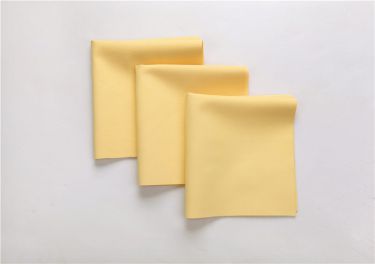
Microfiber towels are manufactured from extremely fine synthetic fibers, generally polyester, polyamide, or a blend of both. Many microfiber filaments have a diameter of approximately 0.01 mm or less. These fibers are split during production to create a greater surface area and a capillary structure.
That construction gives a microfiber towel several functional advantages:
In practical terms, the towel is not simply wiping a surface. It is managing friction, moisture, chemical residue, and particulate contamination at the same time. That combination explains why microfiber towels for car detailing have become a standard tool in paint correction, ceramic-coating preparation, drying, glass cleaning, and interior care.
Automotive paint is protected by a relatively thin clear coat. Although it appears hard, it can still develop visible defects when dirt is pressed and dragged across the surface. A low-quality cloth may move particles laterally, creating fine scratches and holograms.
Microfiber uses thousands of fine contact points to pick up and retain particles. When combined with proper pre-rinsing, a clean wash process, and light straight-line passes, it helps reduce the chance of dragging contamination across the panel. It does not make a dirty surface safe to wipe, however. Even the best towel cannot replace a proper two-bucket wash, rinse process, or clay-bar decontamination when required.
Drying is one of the most time-sensitive stages in vehicle care. Hard-water minerals can leave calcium and magnesium spots when droplets evaporate on paint or glass. A high-GSM drying towel absorbs water quickly and reduces the number of passes required.
For many detailing applications, suppliers offer towels in different weights and constructions:
| Application | Common towel design | Typical selection consideration |
|---|---|---|
| Paint drying | High-GSM twisted-loop or plush | High absorbency and large surface area |
| Polish removal | Short-pile or dual-pile | Controlled residue removal without excessive drag |
| Glass cleaning | Low-pile, tight-weave | Low lint and reduced streaking |
| Interior detailing | Medium-pile, general-purpose | Balanced absorption and easy laundering |
| Coating leveling | Short-pile or coating-specific | Controlled wipe-off and minimal residue |
Lint is especially problematic on black paint, piano-black trim, instrument panels, screens, and glass. A towel that leaves fibers behind increases finishing time and can create the impression of poor workmanship.
For this reason, professional buyers should examine edge construction, pile uniformity, fiber shedding, colorfastness, and cutting quality—not just the towel’s color or advertised GSM. Laser-cut and ultrasonic-cut edges may reduce bulky seams, while a carefully bound edge can improve durability. The correct choice depends on the application and the finish being treated.
Why Microfiber Towels Are Widely Used in Automotive Detailing Industry also has a clear commercial explanation: they help standardize work. A professional shop may process dozens of vehicles each week, and inconsistent towels can lead to uneven results, paint rework, customer complaints, and wasted labor.
For Kaiyuan and other automotive-care brands, importers, and distributors, microfiber towel quality affects more than product appearance. It influences:
A towel used on wheels or exhaust surfaces should never be returned to the paint-care inventory. Brake dust and metallic particles can become embedded in the fabric and later cause severe marring. A simple color-coded system—such as separate colors for paint, glass, interior, and wheels—can improve process control.
Quality claims should be supported by measurable inspection procedures. When evaluating Kaiyuan microfiber towels or another private-label supplier, buyers should request a documented specification sheet and quality-control plan rather than relying only on product photographs.
These standards do not automatically mean that every towel is suitable for automotive paint. They provide a more reliable framework for comparison. The final approval should include a real-world vehicle test covering dry wiping, wet wiping, polish removal, glass cleaning, and laundering.
Consider a detailing operation that completes 10 vehicles per day. If an unsuitable towel adds only 8 minutes of rework per vehicle, the business loses approximately 80 minutes of productive capacity each day. Over 26 working days, that equals nearly 35 hours per month—before accounting for polishing compound, additional labor, customer compensation, or delayed deliveries.
A second common problem is cross-contamination. If one towel is used first on wheels and later on paint, embedded metallic dust may create visible defects. The immediate cost may be a single replacement towel, but the wider cost can include a multi-stage paint correction and a dissatisfied customer.
These examples demonstrate Why Microfiber Towels Are Widely Used in Automotive Detailing Industry: the product supports process consistency. However, the towel must be matched with correct washing, storage, folding, and application discipline.
Ignoring microfiber quality can create both technical and commercial consequences:
The risks become more serious when business conditions change. A shop moving from occasional detailing to high-volume fleet work needs standardized towel specifications. A distributor entering a premium ceramic-coating market needs low-lint, coating-compatible options. A brand such as Kaiyuan must also consider packaging, private labeling, color assortment, delivery schedules, and batch traceability—not only the towel’s initial unit price.
Even a premium towel requires correct handling. We recommend the following operating procedure:
Why Microfiber Towels Are Widely Used in Automotive Detailing Industry comes down to controlled contact: microfiber combines fine split fibers, strong absorbency, low-lint performance, and reusable construction in one detailing tool. For professional results, Kaiyuan buyers should evaluate GSM, pile type, edge design, colorfastness, absorbency, durability, inspection procedures, and application suitability.
Do not treat a microfiber towel as an inexpensive accessory. Treat it as part of the paint-protection system and the business process. By selecting the right Microfiber Towels for Car Cleaning, requesting measurable quality evidence—including standards-based testing and, where appropriate, 100% inspection—and applying disciplined towel management, we can reduce rework, protect vehicle finishes, and deliver a more dependable customer experience.
IF YOU LIKE OUR PRODUCTS, PLEASE CONTACT US
By putting customers ahead, relying on high quality, benefiting from management and contributing to society, people at Kaiyuan are improving constantly with active innovation. We hope to be your companion on the road to success in the near future.
SUBMIT
+ 86 319 6122 556
+86 159 3119 2573
+ 86 319 6122 556
No.2 North Ring Road Economic Development Zone Wei County, Xingtai, Hebei, China. 051130