Fitness studios, yoga apparel companies, gyms, and online wellness retailers often lose repeat sales when towels stay damp, slide during hot yoga, or arrive with inconsistent logos. This guide explains how to source custom microfiber yoga towels wholesale, specify a non-slip yoga towel for hot yoga, and develop private label yoga towels for fitness brands with measurable quality. The key variables are absorbency, grip dots, and quick-dry fabric, supported by GSM, capillary action, and sublimation printing data rather than vague claims.
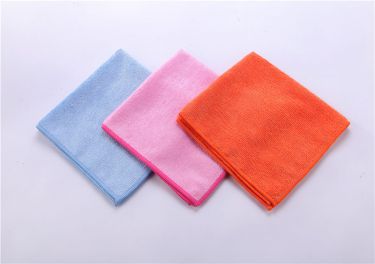
Why Microfiber Towels for Yoga Matter to Fitness Brands
A yoga towel is not simply a smaller bath towel. It is a performance textile placed between the user's hands, feet, and mat while the body produces heat, moisture, and friction. In a heated studio, a participant may release approximately 0.5–1.5 liters of sweat during a long session, depending on body size, room temperature, humidity, and exercise intensity. If the towel cannot move moisture away from the skin, the surface becomes slippery and the user adjusts position repeatedly instead of concentrating on the class.
For a fitness brand, this creates several commercial risks:
- Safety risk: pooled moisture can reduce hand and foot traction during downward dog, plank, lunges, and transitions.
- Hygiene concerns: a fabric that dries slowly can retain odor-causing residues between sessions.
- Brand inconsistency: inaccurate colors, weak stitching, or peeling labels make a premium membership experience feel generic.
- Inventory pressure: excessive minimum order quantities tie up cash in untested colors and seasonal designs.
- Return costs: inaccurate dimensions, dye bleeding, and poor silicone adhesion are common reasons for product complaints.
The commercial opportunity is equally practical. A branded towel can be bundled with a membership, sold at reception, included in instructor kits, or used as a welcome gift for a new subscriber. A 183 × 63 cm towel can cover most standard yoga mats, while a 183 × 80 cm version offers additional side coverage for hot yoga and floor-based workouts. The correct format depends on the brand's class type, mat dimensions, washing process, and retail price target.
Microfiber Towels for Yoga: Materials, Construction, and Performance Terms
Microfiber Yoga Towel Fiber Structure
Microfiber generally refers to ultra-fine synthetic fibers, most commonly polyester, polyamide, or a blend of both. The denier value describes fiber fineness. A lower denier creates a larger total surface area per unit of mass, which can support faster moisture spreading and evaporation. Polyester contributes dimensional stability, color retention, and lower cost. Polyamide contributes a softer hand feel and can improve liquid uptake, although the final performance depends on yarn construction and finishing.
Many towel suppliers use a 80% polyester and 20% polyamide blend or a 100% polyester construction. Neither ratio automatically guarantees superior performance. Ask for laboratory or internal test results covering:
- Water absorption time in seconds
- Water absorption capacity as a percentage of dry weight
- Drying time under a defined temperature, airflow, and humidity
- Colorfastness after repeated washing
- Dimensional change after washing
- Peel strength or adhesion of the anti-slip coating
GSM, Absorbency, and Capillary Action in Yoga Towels
GSM means grams per square meter and indicates fabric weight. Common yoga towel specifications range from approximately 180 to 300 GSM. A 200 GSM towel is lighter and easier to pack, while a 280 GSM towel may provide a denser hand feel and higher moisture capacity. Increasing GSM also raises shipping weight, drying time, and material cost, so a higher number should not be treated as a universal upgrade.
Absorbency is influenced by capillary action: liquid moves through narrow spaces between fibers because of surface tension and adhesion. A brushed or split-fiber surface can increase the available contact area, allowing sweat to spread across the towel instead of remaining in one wet patch. For product development, a practical target may be water absorption within 1–3 seconds and a dry-to-touch time under 60 minutes in a controlled test at approximately 20–25°C with moderate airflow. These figures should be confirmed by the supplier using the same test method for every sample.
Grip Dots, Silicone Coating, and Non-Slip Performance
Anti-slip performance usually comes from silicone dots, PVC dots, a full silicone print, or a textured underside. Silicone dots are flexible and can provide localized traction without making the towel excessively rigid. A full coating may improve contact with the mat but can increase weight, reduce breathability, and create a warmer hand feel.
Request a grip test using the actual towel, the intended yoga mat material, and a defined wet condition. A simple internal method is to place a 5 kg load on the towel, raise one end of the mat gradually, and record the angle at which movement begins. This is not a substitute for a standardized laboratory method, but it gives buyers a repeatable comparison. Test both dry and sweat-damp surfaces because silicone performance can change when water forms a lubricating film.
OEM Buying Process for Microfiber Towels for Yoga
1. Define the Fitness Brand Use Case
Start with the actual environment rather than a generic product catalog. A boutique yoga studio may need a towel that survives daily commercial laundering. An e-commerce brand may prioritize folded size, packaging appearance, and shipping weight. A hotel wellness program may require neutral colors, barcode labels, and a larger replenishment schedule.
- Record the mat length and width used by customers.
- Estimate the number of washes per week.
- Identify whether the towel is used for hot yoga, Pilates, gym training, meditation, or travel.
- Set the target retail price, landed cost, and acceptable defect rate.
- List the required brand elements: logo, color palette, hangtag, care label, barcode, and packaging.
For example, a studio with 12 classes per day may need a commercial-grade towel with reinforced hems and a color that remains stable after frequent washing. A direct-to-consumer brand may choose a lighter 200 GSM towel, a reusable pouch, and a three-color collection to reduce initial inventory risk.
2. Select the Right Towel Size and GSM
Use a specification sheet before requesting prices. A practical starting point is:
| Application | Suggested Size | Suggested GSM | Key Priority |
|---|---|---|---|
| Travel and gym towel | 80 × 40 cm | 180–220 GSM | Low packing volume and quick drying |
| Standard yoga mat cover | 183 × 63 cm | 200–260 GSM | Balance of coverage, grip, and absorbency |
| Hot yoga and extended mats | 183 × 80 cm | 220–300 GSM | Additional side coverage and moisture capacity |
| Hand towel for studios | 50 × 30 cm | 180–240 GSM | Fast turnover and low laundry cost |
Allow a dimensional tolerance in the purchase order, such as ±2–3 cm for large towels, and define whether the measurement is taken before or after washing. A towel that is 183 cm before laundering may finish at 179 cm if the knitting, dyeing, and heat-setting process is not controlled.
3. Compare Fabric Samples and Construction Details
Order several samples rather than approving the first attractive piece. Compare the face side, underside, hem, label attachment, and silicone pattern under normal use. Record each sample's weight, size, fiber composition, and wash history.
- Visual check: inspect loops, brushed areas, streaks, dye marks, and logo edges under bright light.
- Hand-feel check: compare softness, thickness, flexibility, and surface drag on a real mat.
- Moisture check: apply a fixed 5 ml water volume and measure spreading time and remaining wet area.
- Grip check: test the dry and damp towel during plank and lunge movements.
- Construction check: count stitches per centimeter and inspect whether the hem remains flat after stretching.
For a premium product, double-needle hems or a tightly bound edge can reduce fraying. Rounded corners may improve appearance and reduce edge curling. If the towel includes an elastic strap or hanging loop, test the attachment with repeated pulling because accessories often fail before the fabric does.
4. Approve Logo Printing and Color Development
Sublimation printing is commonly used for polyester microfiber because the dye becomes part of the fiber surface under heat and pressure. It supports detailed artwork and full-color patterns, but the final shade can vary according to fabric whiteness, ink profile, temperature, dwell time, and production equipment.
For accurate brand control:
- Provide vector artwork in editable format and specify Pantone references where possible.
- Request a physical strike-off, not only a digital rendering.
- Approve the logo at the final production size because fine text may lose clarity when reduced.
- Define the acceptable color difference using an agreed ΔE tolerance if color matching is critical.
- Check the printed design after one, five, and ten wash cycles.
Embroidery is usually unsuitable for a full yoga towel because it creates a hard, raised area that can feel uncomfortable under the body. A woven label or heat-transfer care label can work for brand identification, provided the edges do not scratch the skin.
5. Test Washing, Drying, and Odor Control
Laboratory approval is useful, but a fitness brand should also run a simulated customer-use test. Wash at least three samples according to the intended care instruction. If the product will be used in studios, include a higher-frequency test than a normal household schedule.
- Wash samples for 10, 25, and 50 cycles using the intended detergent concentration.
- Measure length, width, and weight after each stage.
- Inspect print color, seam integrity, silicone adhesion, and surface pilling.
- Record drying time in a normal indoor environment and in a commercial dryer if applicable.
- Check odor after the towel is stored damp for a defined period, such as four hours.
A care label should state the maximum washing temperature, drying method, ironing restriction, and bleaching limitation. Avoid promising “odor-free” performance unless the product has a documented antimicrobial treatment and the claim complies with the destination market's labeling rules. In many cases, fast drying and correct laundering are more defensible than an unsupported antimicrobial claim.
6. Confirm OEM MOQ, Lead Time, and Quality Control
OEM pricing depends on fabric weight, size, print area, color count, anti-slip coating, packaging, accessories, and order quantity. Ask the factory to separate one-time charges from unit pricing. Artwork setup, mold fees, sample fees, packaging plates, and inspection costs can materially change the first-order budget.
A typical development sequence may include:
- Requirement review: one to three business days for specification confirmation.
- Sample development: approximately 7–15 business days, depending on fabric and artwork.
- Sample approval: allow time for washing and grip testing rather than approving immediately on appearance.
- Bulk production: often 20–45 business days after deposit and final approval, depending on quantity and season.
- Inspection and packing: reserve two to five business days for final checking and carton preparation.
These are planning ranges, not guarantees. Production schedules can change during peak seasons, material shortages, or major holiday periods. Put the approved sample, tolerance table, color reference, packaging drawing, and defect classification into the purchase order.
Quality-Control Checklist for Microfiber Towels for Yoga
Use a written inspection plan based on AQL sampling principles or an equivalent internal system. The goal is to prevent cosmetic issues from being confused with functional failures.
| Inspection Area | What to Measure | Example Acceptance Requirement |
|---|---|---|
| Dimensions | Length and width after conditioning | Within agreed ±2–3 cm tolerance |
| Fabric weight | GSM or finished piece weight | Within agreed tolerance, such as ±5% |
| Color | Visual comparison or spectrophotometer reading | Within approved color tolerance |
| Printing | Registration, sharpness, stains, and wash durability | No visible logo distortion or major bleeding |
| Anti-slip layer | Coverage, adhesion, and movement on a mat | No peeling after wash test; stable under defined load |
| Seams | Skipped stitches, loose threads, and edge flatness | No open seams or loose structural stitching |
| Packaging | Labels, barcode, folding, and carton quantity | Matches approved packing specification |
For the first bulk order, consider a pre-shipment inspection before the remaining payment. Photograph the cartons, random samples, measurements, and defects. This documentation makes supplier communication more precise and helps establish a repeatable standard for future orders.
Packaging and Merchandising for Fitness Brands
Packaging should protect the towel without making the product unnecessarily difficult to recycle or ship. A paper belly band, recycled polybag where required for moisture protection, or reusable drawstring pouch can support different price positions. Include the towel dimensions, fiber content, care symbols, country of origin, importer details where required, and barcode information.
Merchandising language should connect a feature to a measurable customer benefit:
- “200 GSM microfiber” tells the buyer the approximate fabric density.
- “183 × 63 cm full-mat coverage” explains the physical fit.
- “Silicone grip pattern on the underside” identifies the traction system.
- “Dries in approximately 45–60 minutes under controlled airflow” is more credible than “dries instantly.”
- “Tested through 25 wash cycles with no visible seam opening” communicates a defined durability reference.
Do not use “100% waterproof,” “completely odor-proof,” or “guaranteed non-slip” unless the claim is technically and legally supported. Fitness customers notice exaggerated claims quickly, particularly when a towel is used in a hot studio where conditions differ from a product photograph.
Advanced OEM Strategies for Microfiber Towels for Yoga
Build a Two-Tier Product Line
A two-tier range can serve different customers without creating excessive complexity. The entry model may use 200 GSM polyester microfiber, a one-color logo, and standard packaging. The premium model may use a polyester-polyamide blend, 240–280 GSM fabric, denser silicone dots, custom artwork, and a storage pouch.
Keep the base dimensions consistent when possible. Shared cartons, labels, and display fixtures reduce operational complexity. Change only the elements that customers can understand, such as fabric feel, grip structure, color range, and packaging.
Use Small Pilot Orders Before Full Customization
When a brand has no historical sales data, a pilot order reduces forecasting risk. For example, a studio can test two colors and two packaging formats across four weeks. Track unit sales, towel complaints, class attendance, repeat purchases, and washing results. If one color sells 37% more units than the second color, future production can shift inventory toward the proven option rather than relying on assumptions.
Keep a control sample from the approved batch. Future reorders should be compared against that sample for color, weight, hand feel, dimensions, and grip. This is particularly important when the factory changes yarn, dye lot, coating supplier, or production line.
Plan for Sustainability Without Weakening Performance
Recycled polyester can reduce reliance on virgin feedstock, but the environmental claim should identify the actual percentage and certification status. A durable towel that remains usable after 50 wash cycles may create less replacement demand than a low-cost towel that loses grip after 10 cycles. Evaluate sustainability through material content, expected service life, packaging volume, washing requirements, and end-of-life options.
Also consider microfiber shedding during laundering. Provide care instructions that encourage full-load washing, lower temperatures where appropriate, and the use of a washing bag or filtration system if the brand has a sustainability program. Avoid presenting one material choice as automatically sustainable without considering the complete product lifecycle.
How Kaiyuan Can Support Custom Microfiber Yoga Towel Projects
Kaiyuan can be approached with a structured OEM brief covering dimensions, GSM, fiber composition, printing method, anti-slip design, packaging, target quantity, destination market, and required testing. A clear brief allows the supplier to recommend a realistic construction instead of quoting an unsuitable standard towel.
When discussing a project with Kaiyuan, prepare:
- Brand logo files and color references
- Expected retail price and target landed cost
- First-order quantity and estimated annual demand
- Preferred towel size and acceptable tolerances
- Intended use, including hot yoga, Pilates, gym, or travel
- Packaging artwork and labeling requirements
- Performance targets for absorption, drying, grip, and wash durability
A supplier conversation becomes significantly more productive when the brand asks for measured results, a physical sample, a wash-test record, and a production-control plan. This approach also makes it easier to compare Kaiyuan with other factories on equivalent specifications rather than comparing attractive photographs and incomplete descriptions.
Conclusion: Choosing Microfiber Towels for Yoga with Lower Buying Risk
The strongest OEM decision combines fit, fabric engineering, grip design, print durability, laundering performance, packaging, and documented quality control. For most fitness brands, a 183 × 63 cm towel in the 200–260 GSM range is a practical starting point, while hot-yoga programs may benefit from wider coverage and a denser anti-slip underside. Before placing a large order, approve a washed sample, confirm production tolerances, and test the product on the actual mat used by customers.
Whether you need custom microfiber yoga towels wholesale, a non-slip yoga towel for hot yoga, or private label yoga towels for fitness brands, compare absorbency, grip dots, and quick-dry fabric through measurable GSM, capillary action, and sublimation printing specifications. Contact Kaiyuan to discuss samples, OEM construction, branding, packaging, and a quality plan suited to your fitness business.